My initial experience with Vienna was a very hustle and bustle city, full of people who walk with purpose to get to their destination. However, in being here for some time, I have begun to recognize a certain culture of stagnation. As I came upon St. Charles’ Church, I was amazed by its beauty. I found myself walking to and from across the front of the building in order to capture the perfect picture.
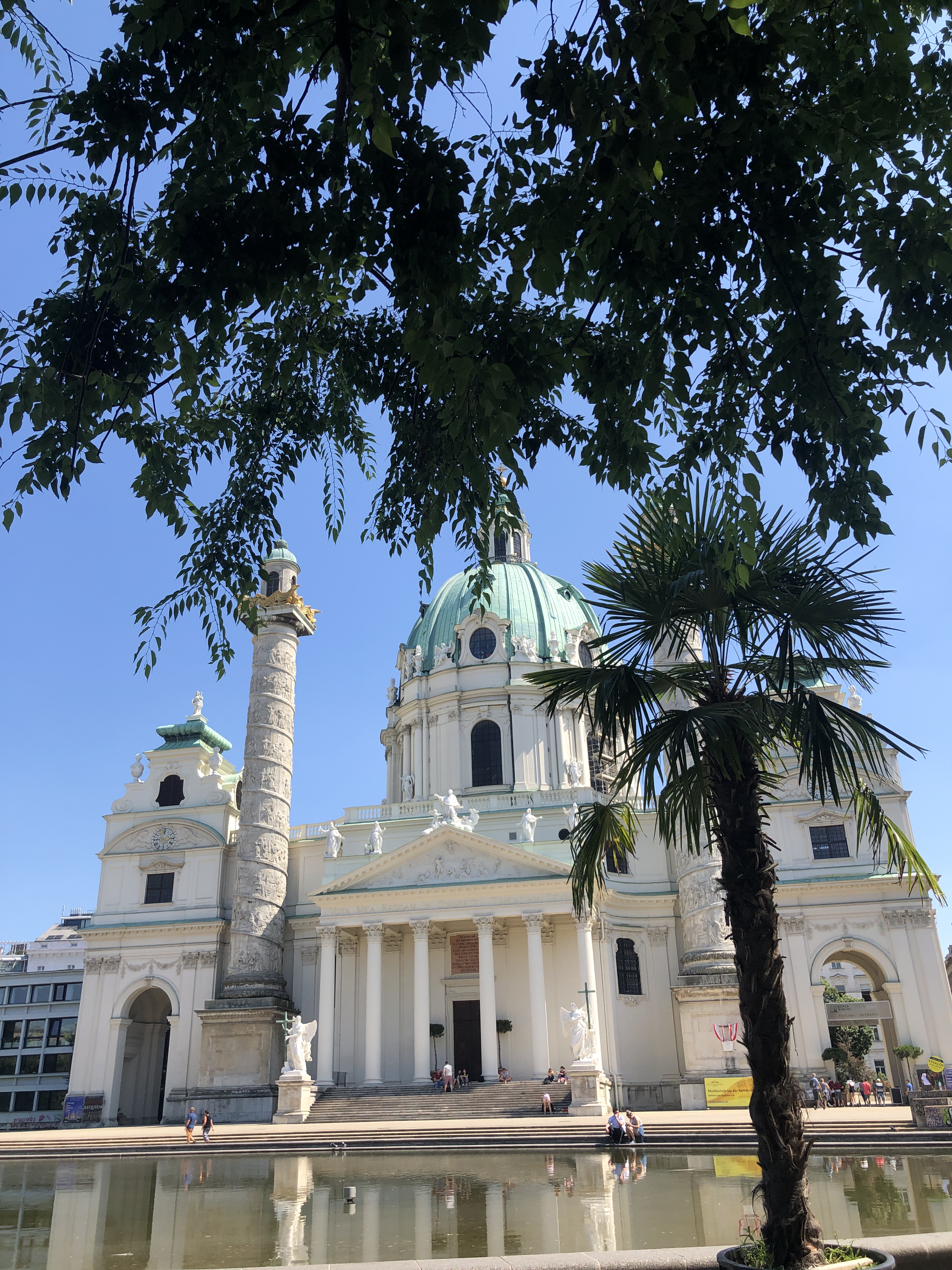
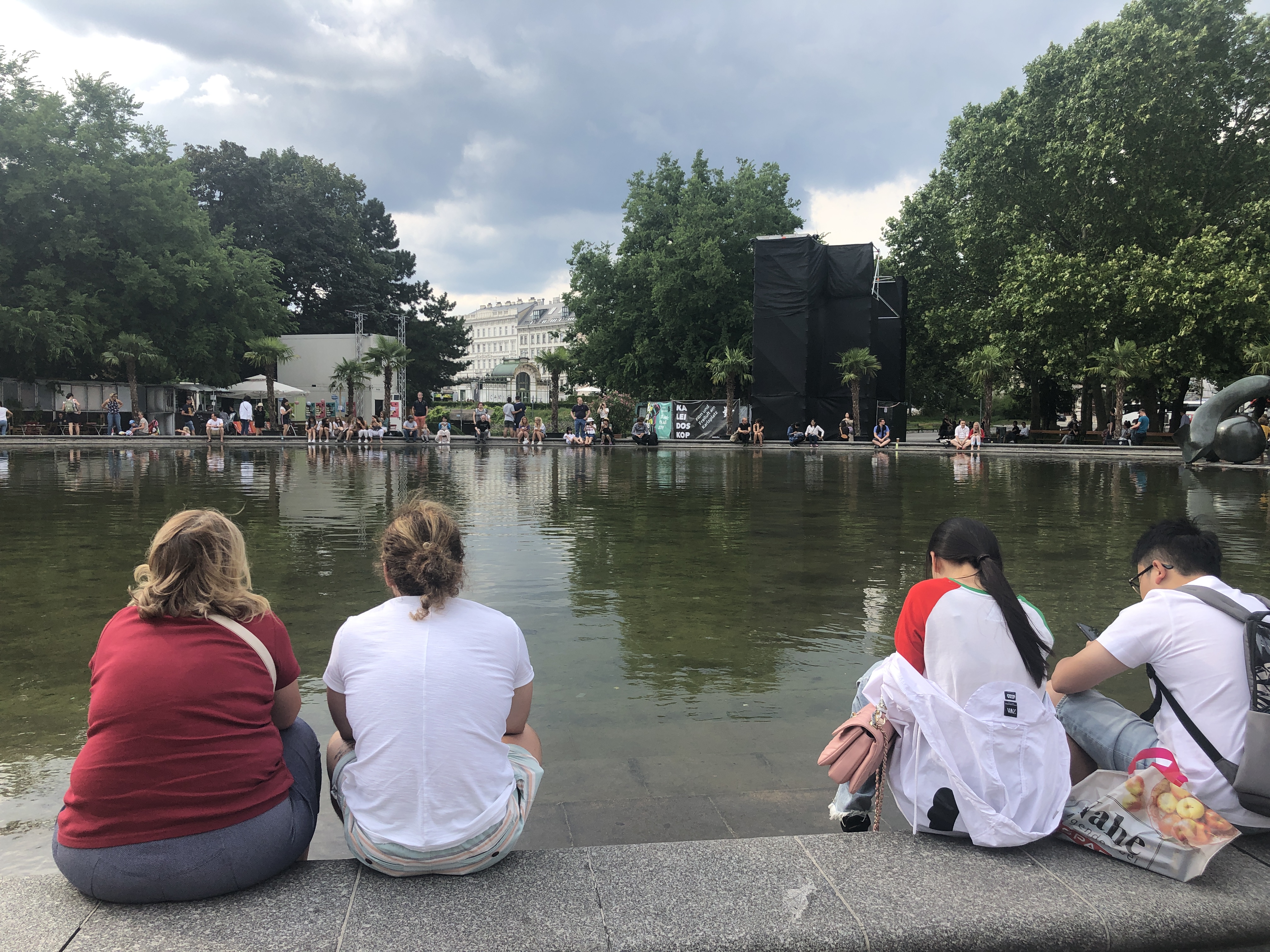
It was not until I forced myself to put my camera away and take in the marks of history that were surrounding me, that perception of the life of the Viennese people shifted. As I gazed around the circular pond, which disrupted the movement through the courtyard of St. Charles, I witnessed many people doing something that I had not before experienced up close on this trip. A woman, practically right in front of me was faced toward the pond, her dark grey capris scrunched up to her knees, as she sat peacefully reading a book. How long had she been there? Despite all of the movement happening around her, she did not appear to be conscious of any of it. Her dog, who stood obediently next to her, began to lick her exposed shin. I think he recognized how stagnant she was, and wanted some much deserved attention, but still nothing.
She was a younger woman, much like the people I saw at the University of Vienna. The air there was stale and smelled vaguely of cigarette smoke. Perhaps it was due to the off-season, but similar to St. Charles, I witnessed very little movement. I came upon the center courtyard, where I observed many of what I assumed to be students, sitting or lying still throughout the thick green grass. One young man appeared to be taking a nap, and with my jetlag still in full force, I began to wish it was me in that position. I did not want to disturb the peace with my curiosity and frequent movements, so I stayed on the outskirts of the courtyard.
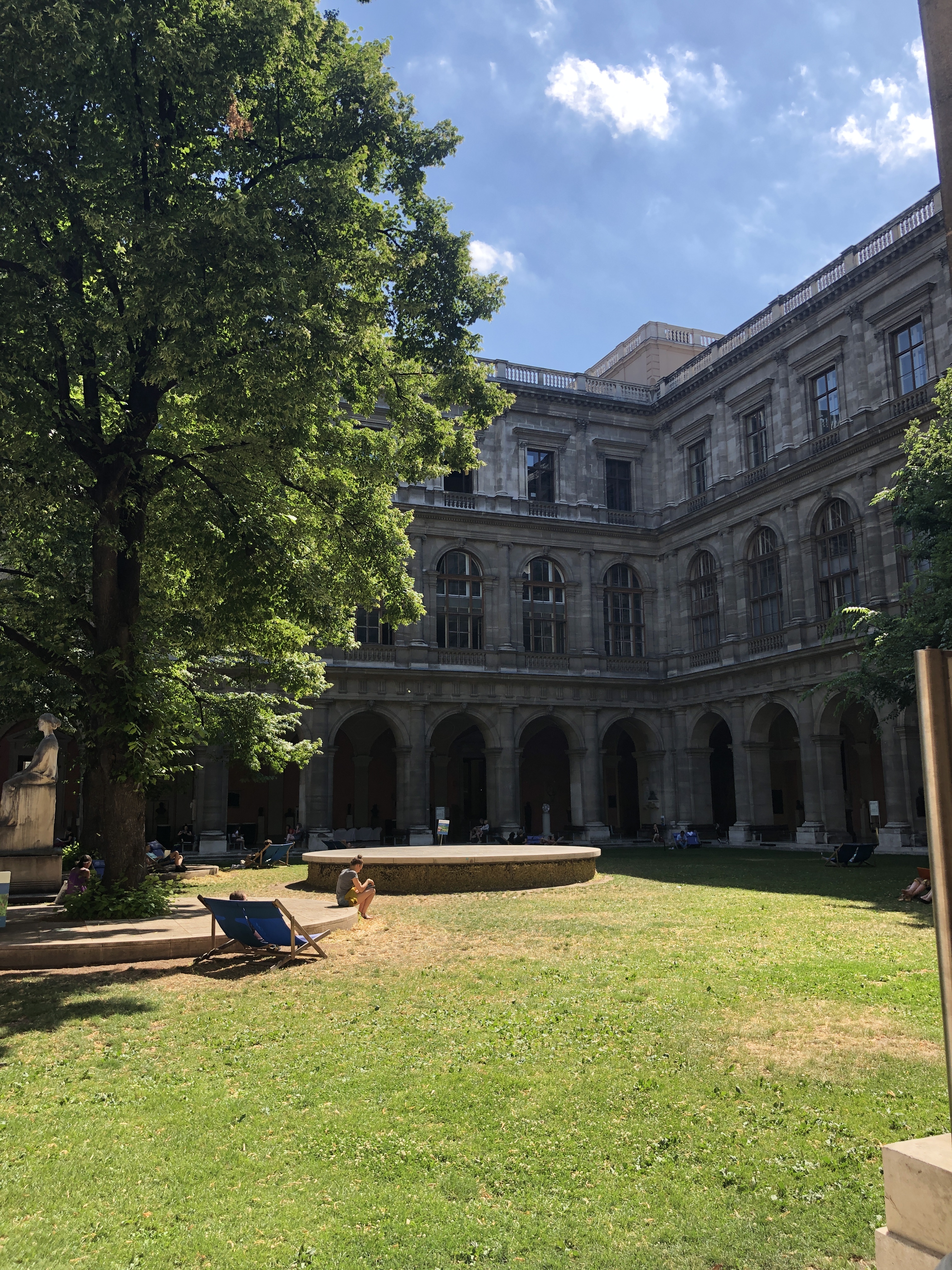
As I was walking, I saw a middle aged woman sitting on a bench. She had with her a big black bag, which in America would seem suspicious to me, but there’s something about this relaxed culture in Vienna that did not make me feel uneasy about it. She also had in her left hand a cigarette, which she was putting out by rubbing it on the floor surrounding the courtyard. The college was such a beautiful place, so it was strange to me that someone could potentially be harming it. Although this woman exhibited small movements, I would say that she contributed to the stale, stagnant air of the place. I am definitely not one for the smell of smoke.
I prefer the movement of air, and experiencing its crispness when coupled with nature. At the Palmenhaus at Schonbrunn palace, my newfound notions of Vienna as a slow paced city were disrupted by our group of eager students. Obviously not Vienna locals, we surely do not understand the culture of stillness, especially for extended periods of time. The fascinating people that I had been observing, who remained so even with minimal movement, were nowhere to be seen at Palmenhaus.
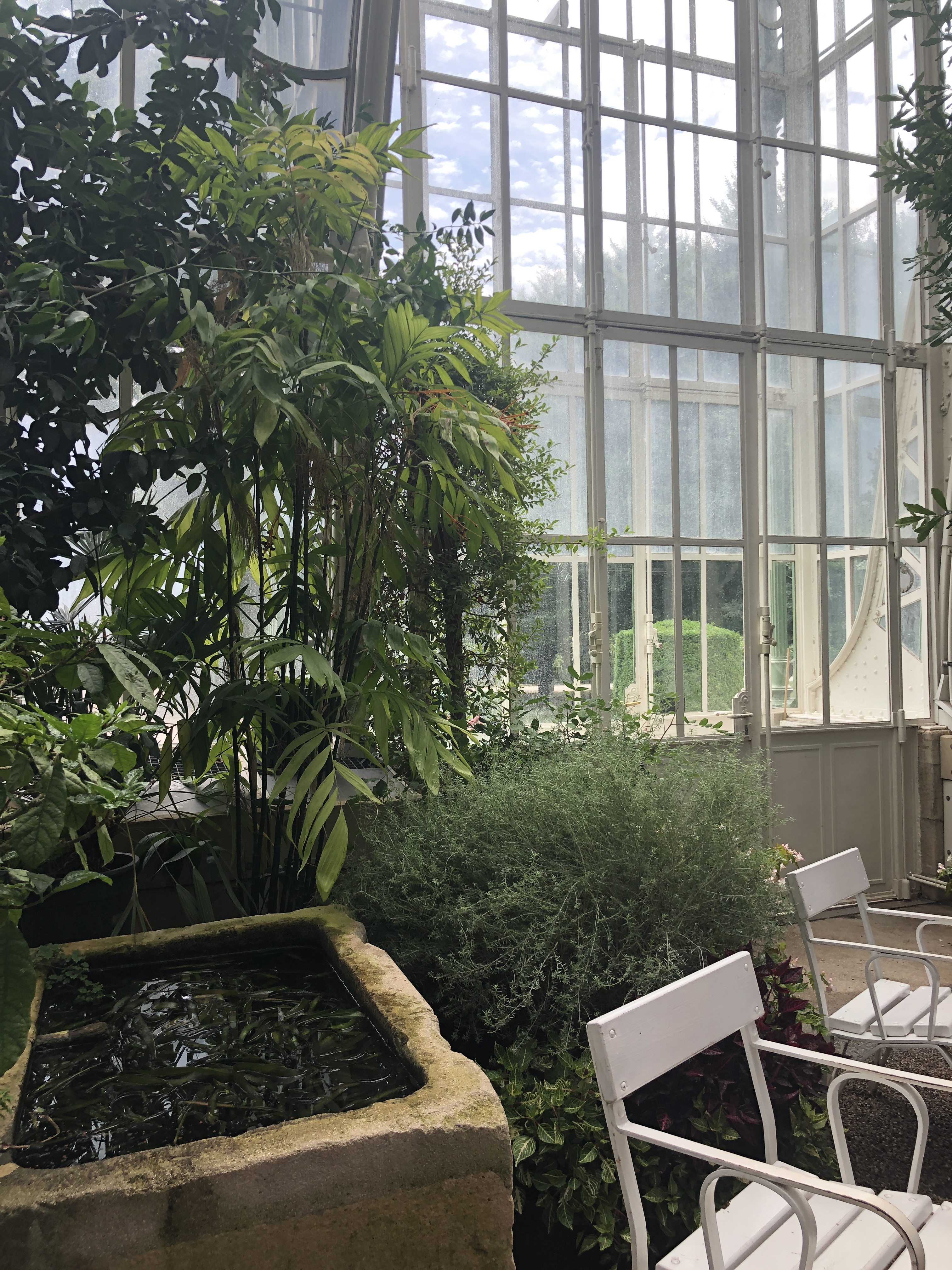
As I attempted to absorb the tepid atmosphere and take in the scenery, I was disrupted by the sight of students moving swiftly through the bushes. I was distracted by the sound of phone cameras going off left and right. This was not the Vienna that I had come to appreciate. While more public areas like St. Charles and the university are places of stagnation – at least for locals – locations such as Palmenhaus which are frequented more by tourists, experience a lot more movement, thus lacking the unique culture of Vienna.
 City As Text