It was a beautiful, cloudy day in Vienna, perfect for strolling through the city center. Instead of doing this however, I was spending my time eagerly in search of a mysterious underground toilet. I did not have much of an idea of what to expect, and the image I was picturing was far from the reality. I apprehensively walked down a flight of stairs to what looked like it could be a subway station, and was immediately transported to the early 1900s. Was this a bathroom or an exhibit? Every last detail was carefully considered in its design, all the way down to the golden soap dispenser.
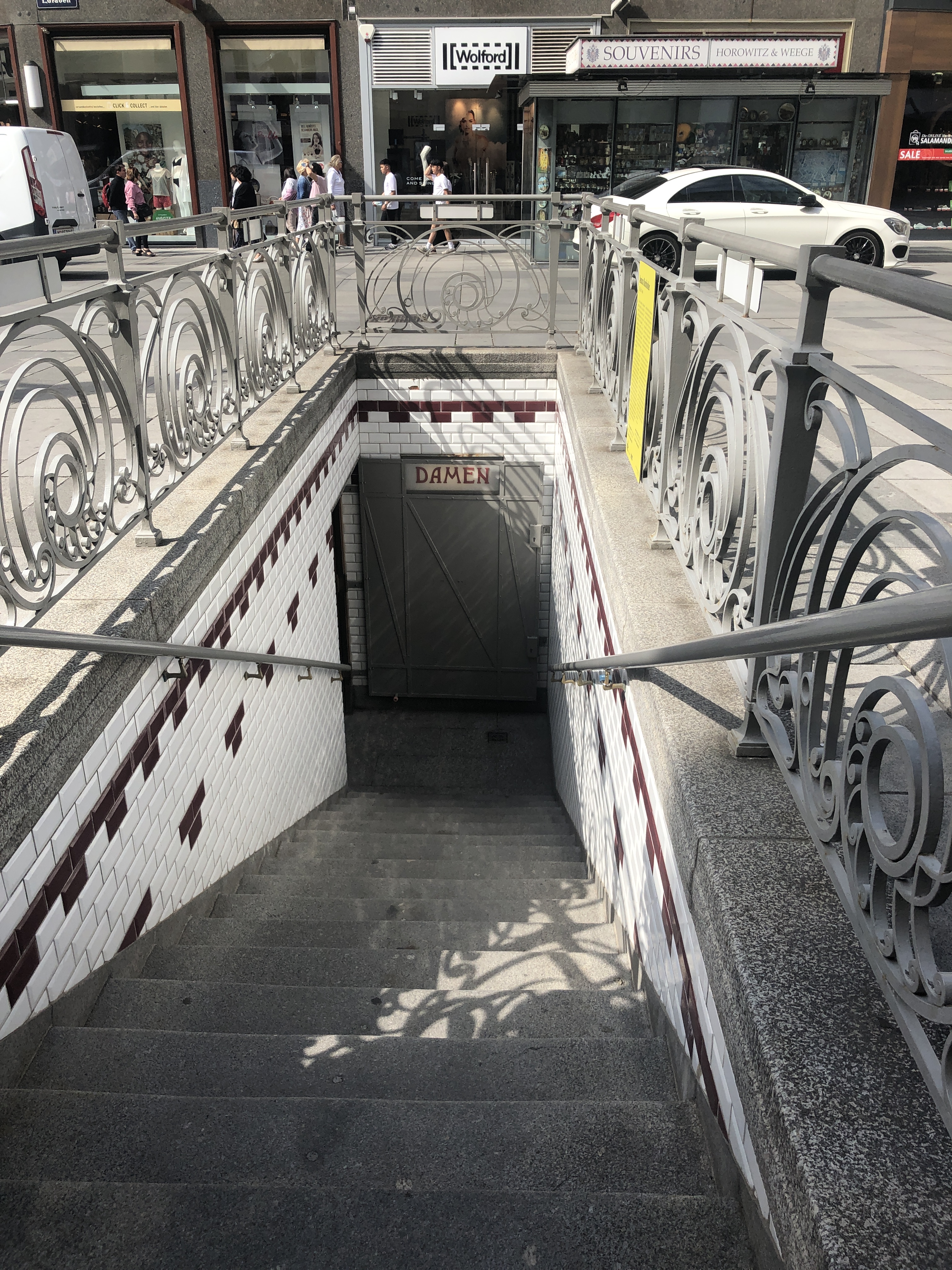
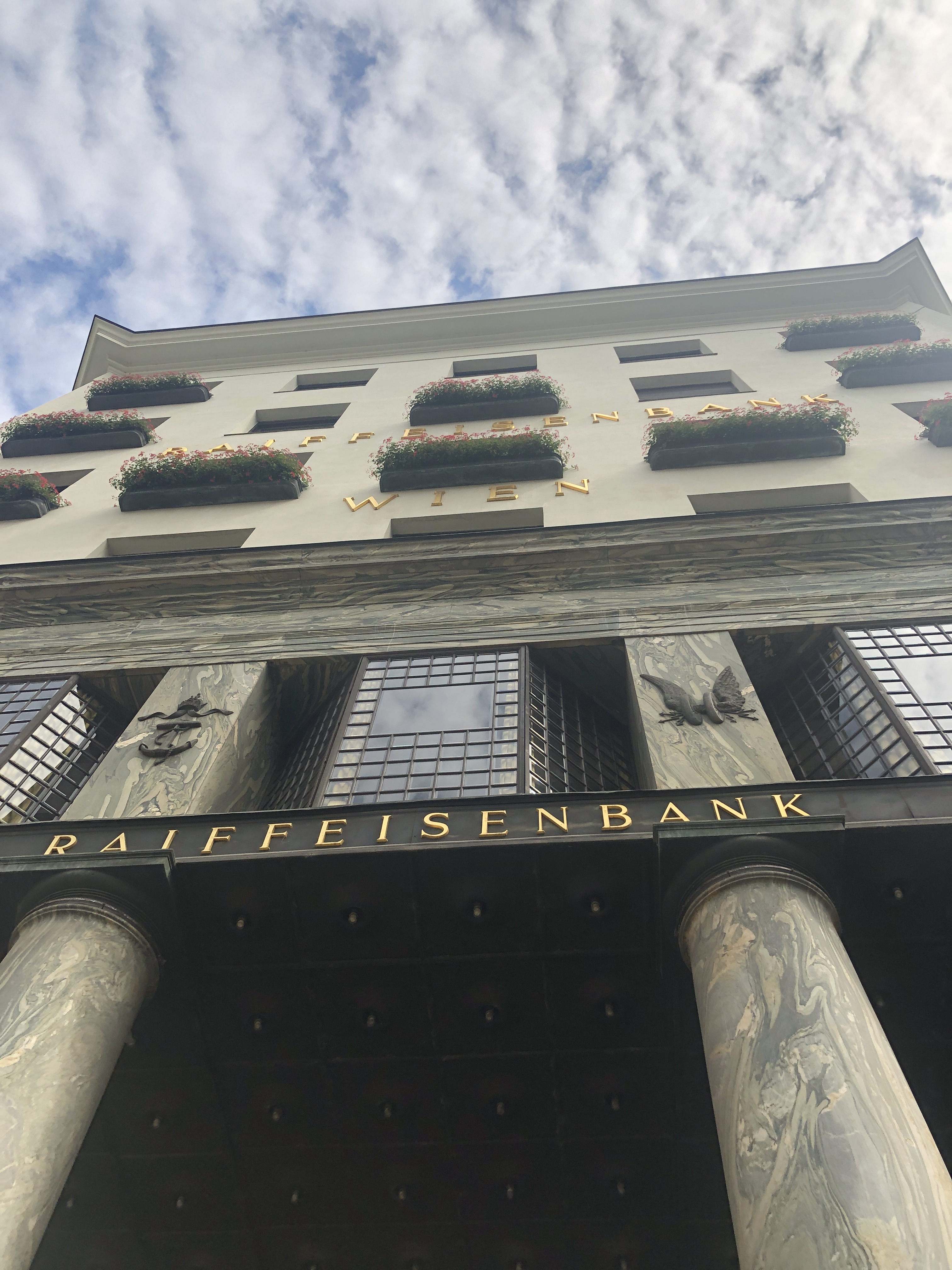
Even the experience of walking into the bathroom was fully integrated into the design. The placement of the streetlight and the red and white subway tile gave me the illusion that I was heading to the train, awaiting my ride to a new destination; but it was just a bathroom. I never imagined that a bathroom could be so completely designed in its form, and I was yet again surprised by another one of Loos’s more controversial works, the Looshaus. From the outside, I gazed upon a building that I might have simply brushed past in order to marvel at the grandeur of the Hofburg palace.
It was the inside that transformed me to a different world. As I entered, I walked along a deep emerald green rug that stretched the width of the room, and continued up the perfectly centered stair. Underneath the rug was a light wood, perhaps teak wood, placed in a hatched pattern. The rest of the front, which was the only place we were allowed to go, was covered with a darker wood that had a slight reddish hue to it. I do not know my wood types very well, but it looked to me like cherry or mahogany. Smaller details like the clock hanging above the stair, and the light fixtures throughout, were so meticulously coordinated with the rest of the design, that it they had to have been designed by Loos himself. Surely I would never have thought to put these materials together, but seeing them in harmony with one another made me realize, once again, how much Loos paid attention to the totality of his works. But as I have come to realize during my time in Vienna, he was not alone.
Visiting the Leopold museum completely changed my perspective on what the idea of a total work of art can mean. On the fourth floor of the museum, I entered into a dim room with walls painted a deep red color. On the wall there were paintings, each set in a unique, ornate golden frame. The secessionists would have hated it. As I continued making my way through, history began to shift right in front of my eyes. Soon, I found myself in a room with white walls, and I honed in on all of the work around me. It was almost completely dedicated to Joseph Hoffman’s Sanatorium. Around the walls of the room were pieces of furniture, fixtures, and other elements of the building. My initial reaction was that every piece had the exact same, distinct style. I circled back through the room and must have seen Hoffman’s name a dozen times. It all made so much sense. The middle of the room featured a scaled model of the building, and as I admired its detail, I could picture each piece of furniture and every fixture positioned throughout the Sanatorium. In another room, I saw cutlery and glassware designed by Hoffman specifically for use in that building.
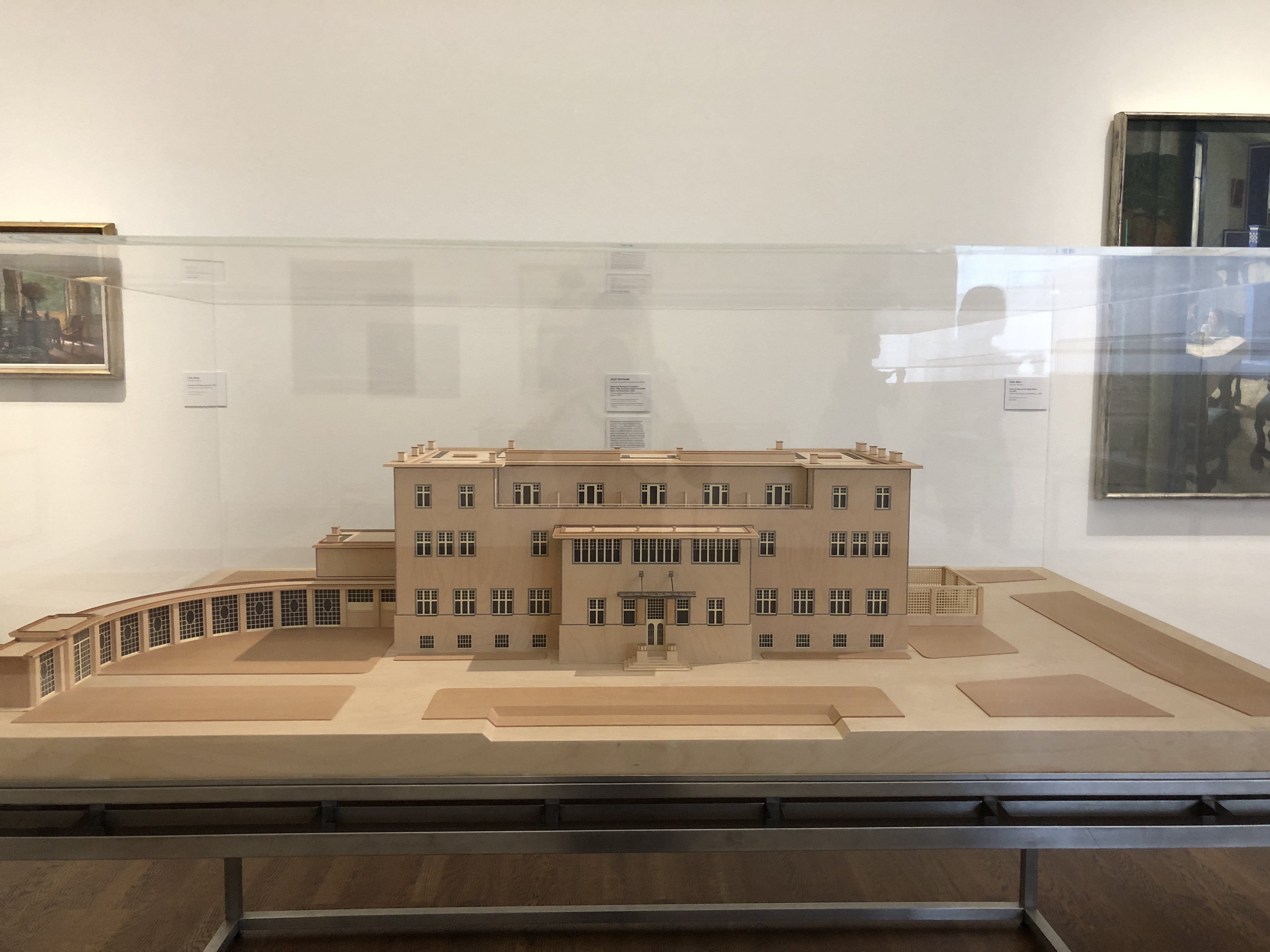
This is the physical manifestation of the total work of art; or in this case, architecture. Surely no one could be trusted to design the furniture for a building when they do not even understand what is being built. Loos and Hoffman were aware of the capabilities and restraints of their designs in both material and program; thus, they took it upon themselves to present total works of art and architecture.
 City As Text