Hopping off the train, I had no idea what to expect. Immediately, I saw what looked like any other apartment building, with sandy colored walls that now looked a shade of grey from the weathering over the years. Balconies and windows were strung with clothing and sheets, as well as over grown houseplants. Something that I noticed throughout the complex was that it all appeared very lived-in. It made me curious as to the types of people that lived there, but I tend to be very nosy about that sort of thing, and really enjoy seeing and experiencing how other people live.
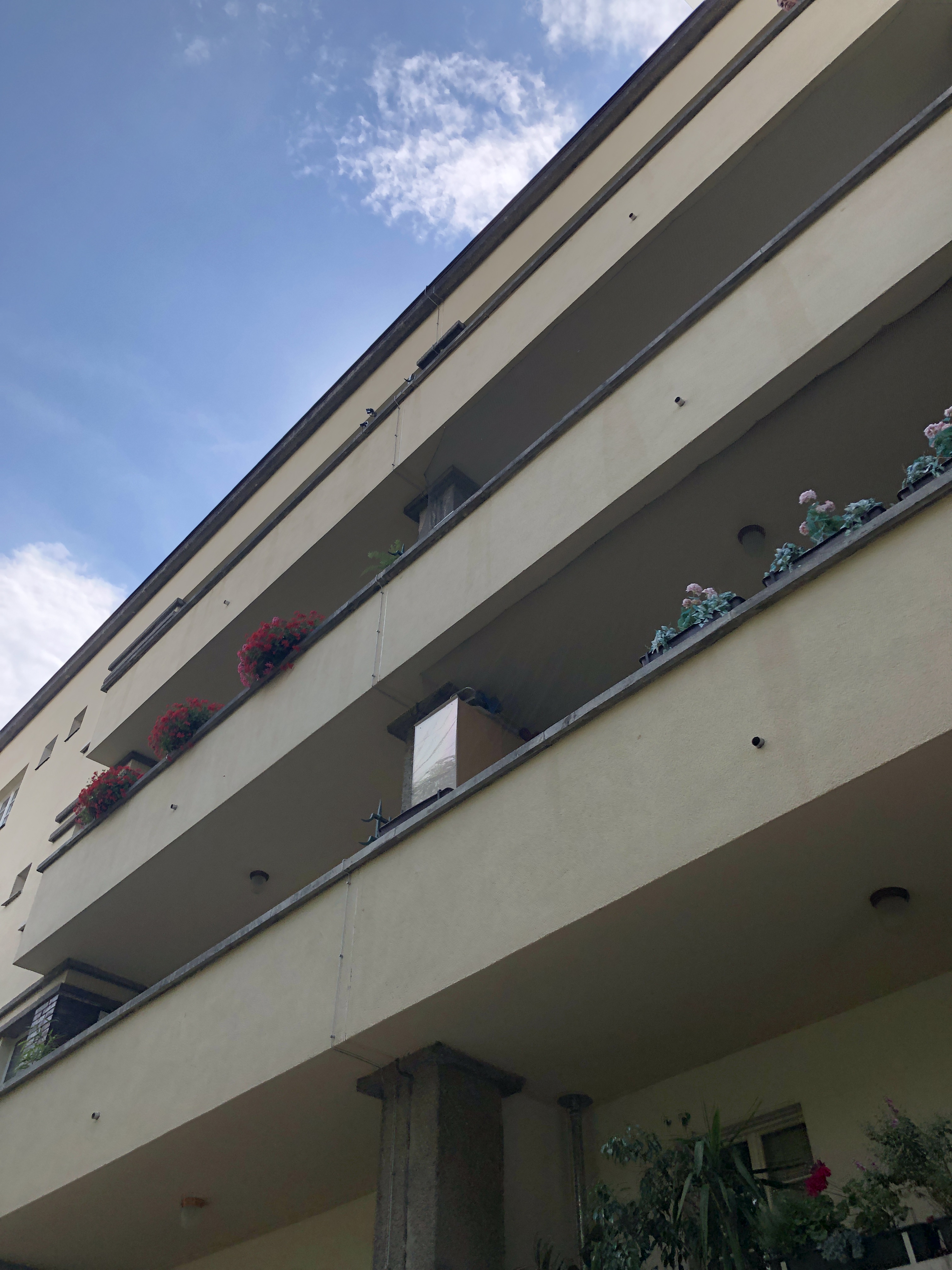
As I began to actually learn about the history of Karl Marx Hof, I was genuinely surprised by its impact, as well as the impact of other social housing complexes that arose during the period of red Vienna. These municipal housing buildings were places for everyone. Immigrants, long time citizens of Vienna, middle class families, and so many more took residence in these centers. It truly seemed as though, no matter who you were, you had hope in finding a comfortable place to live and raise a family. And with a point system in place, getting an apartment was an equitable process that did not strictly benefit the wealthy.
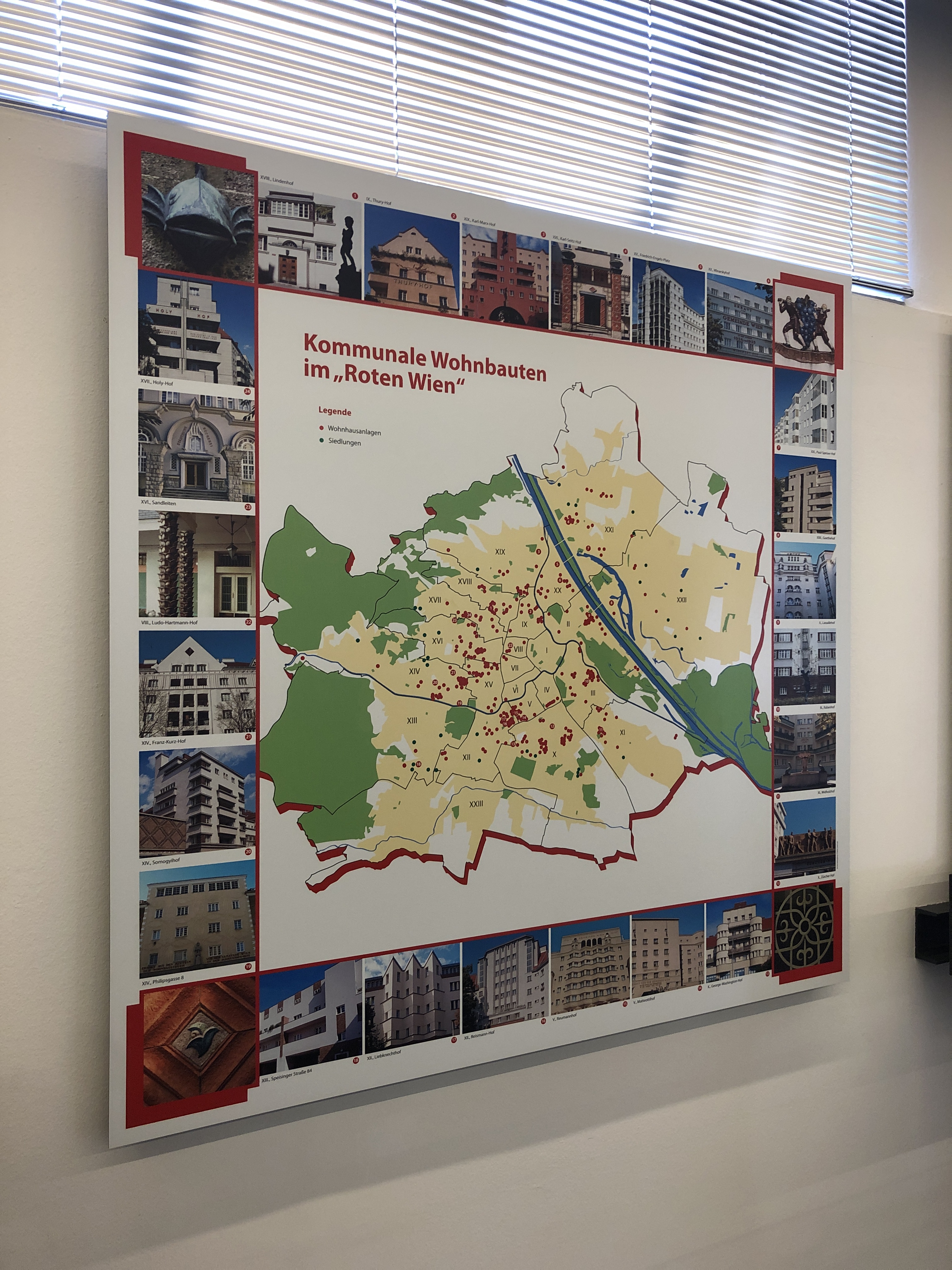
This was easy to see in having a look around Karl Marx Hof. One of the first interactions with a resident that I had was an old woman who sheepishly tried pushing past our tour group to get to the communal laundry room. She was wheeling a laundry bag behind her, and appeared to be in a bit of a hurry. Walking through the courtyards of the complex provided many opportunities for a more personal experience. At a point where the tour group was stopped, a group of children began to shuffle out of a classroom to recess. There was a teacher, and about ten students, who looked around five or six years old. As they entered the gate near their classroom, they began gazing up at us in confusion. Why was a group of young adults standing around outside of their recess area? One little boy in particular got out of his uniform line that the teacher had organized and peeked his head through the fence to get a closer look at us. Our guide noticed him, and said hello. The rest of their conversation was in German, however she did say America, which lead me to believe that he was asking her about us, and that she explained to him who we were. He proceeded to stare at us, and then said out loud in prolonged speech, “America.”
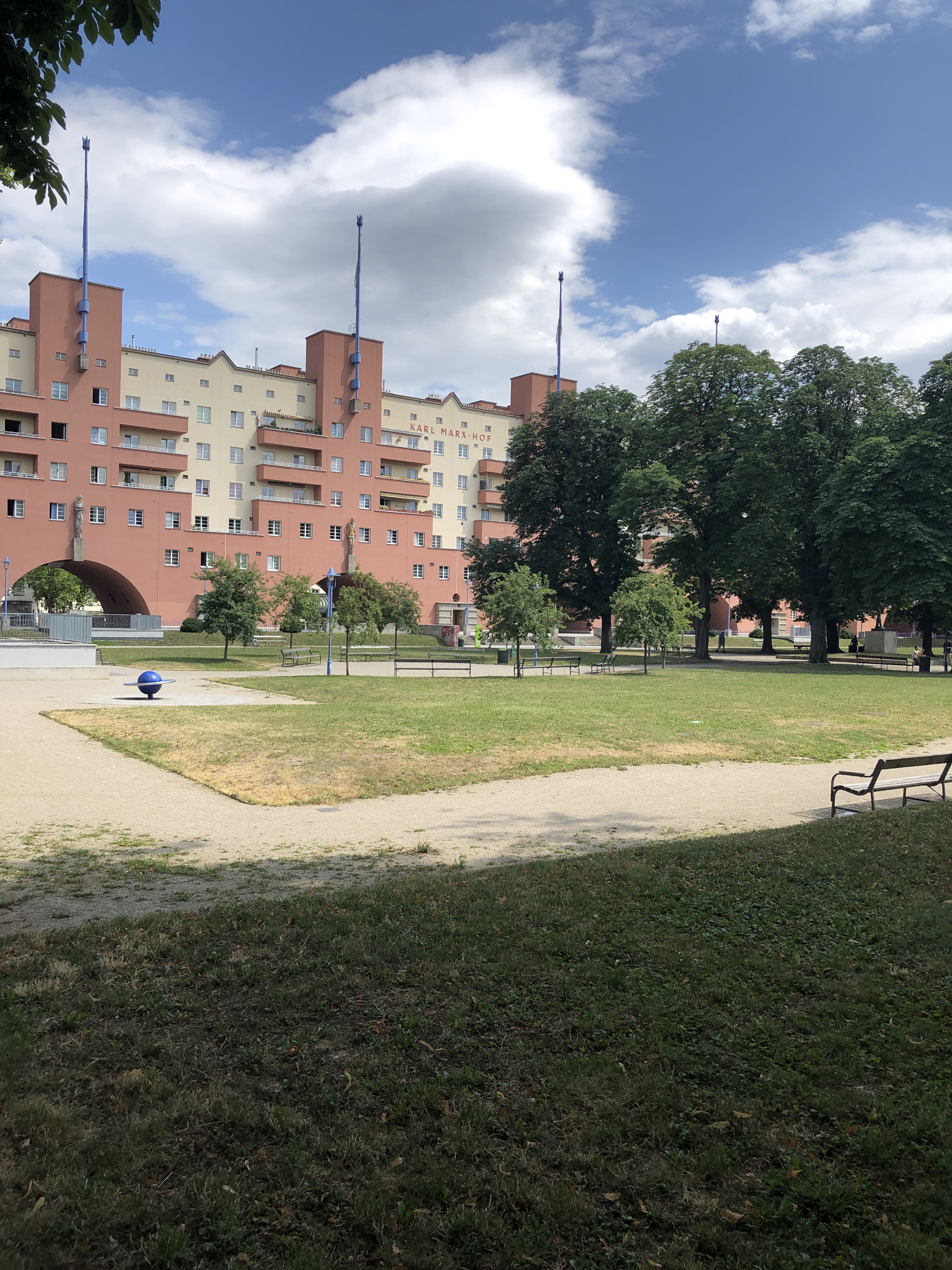
As I later thought about the nature of the people living in Karl Marx Hof today, it occurred to me that all of the people that I came by were products of the hope that was given to the people of the red Vienna period thanks to the social democrats. Without the movement, Karl Marx Hof might not have existed, and these people might not have had the strong sense of community that their home provides them with.
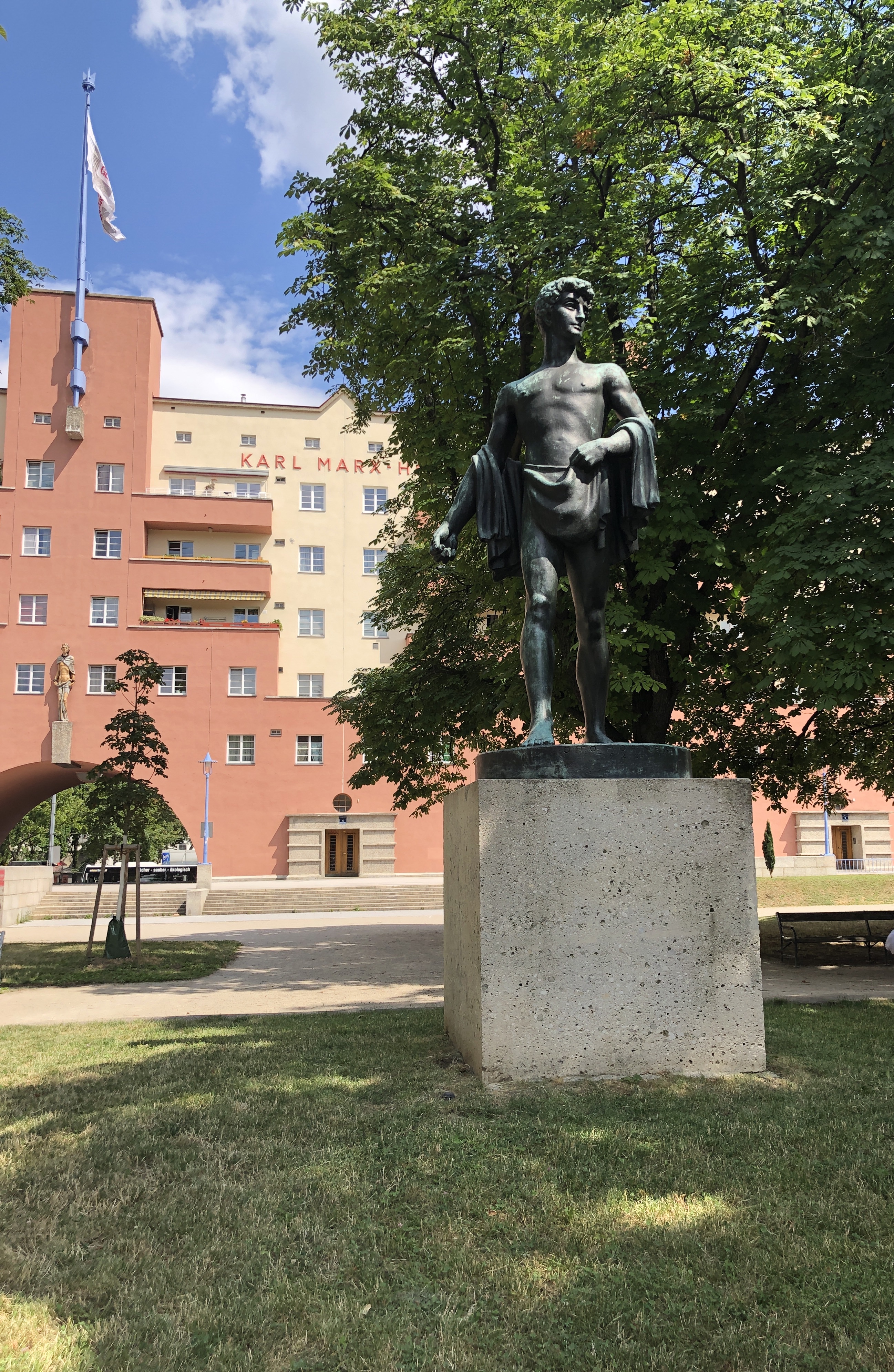
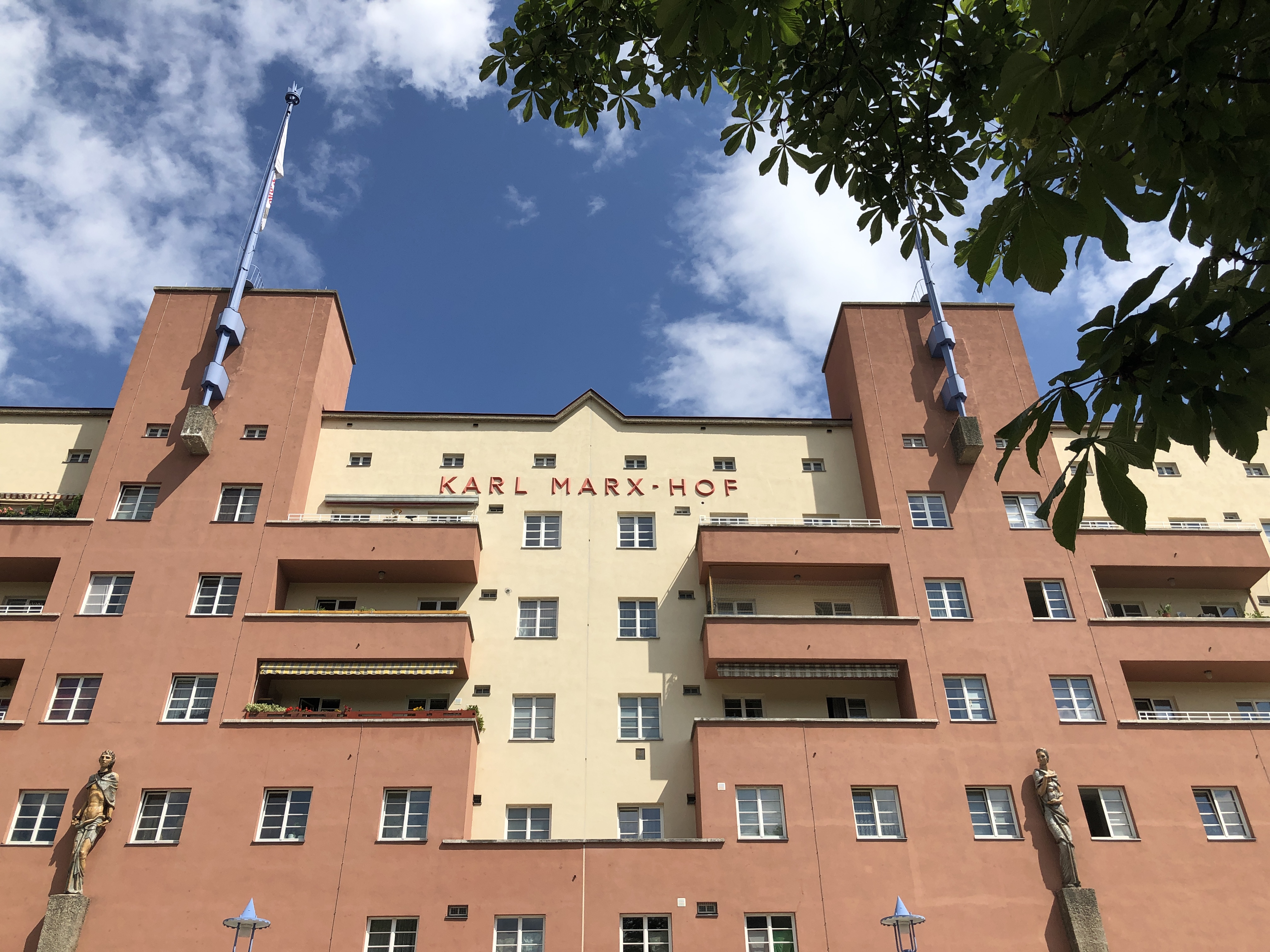
In fact, there were several symbols of hope that I noticed around the complex. One was a statue of a man breaking the chains around his wrists. This, I came to learn, was a symbol of liberation for proletariats during the red Vienna period. Another emblem of hope was a different statue of a man in one of the courtyards who appeared to be planting seeds. The significance of this statue is that the workingman is planting the seeds to grow a better future for himself and those around him. Re-Visiting Red Vienna highlights this sense of hope that municipal housing provided for the proletariats by saying, “Red Vienna gave the Viennese workers what they had voted for. It showed them that they had a voice, and that they counted.” So, what I have come to realize about this place that I perceived to be just an old apartment complex, is that it served many people as a beacon of hope for a better life.
 City As Text