The walk across the Golden Jubilee Bridge reminded me of the bridge at Tempe Town Lake. As I got closer to the other side, however, it was very clear that I was nowhere near my college town. I gazed up at the relatively insignificant exterior to the letters that read Royal Festival Hall. But I could not possibly hold my gaze for long, because the amount of excitement and activity going on around me was overwhelming. I did not know where to look first.
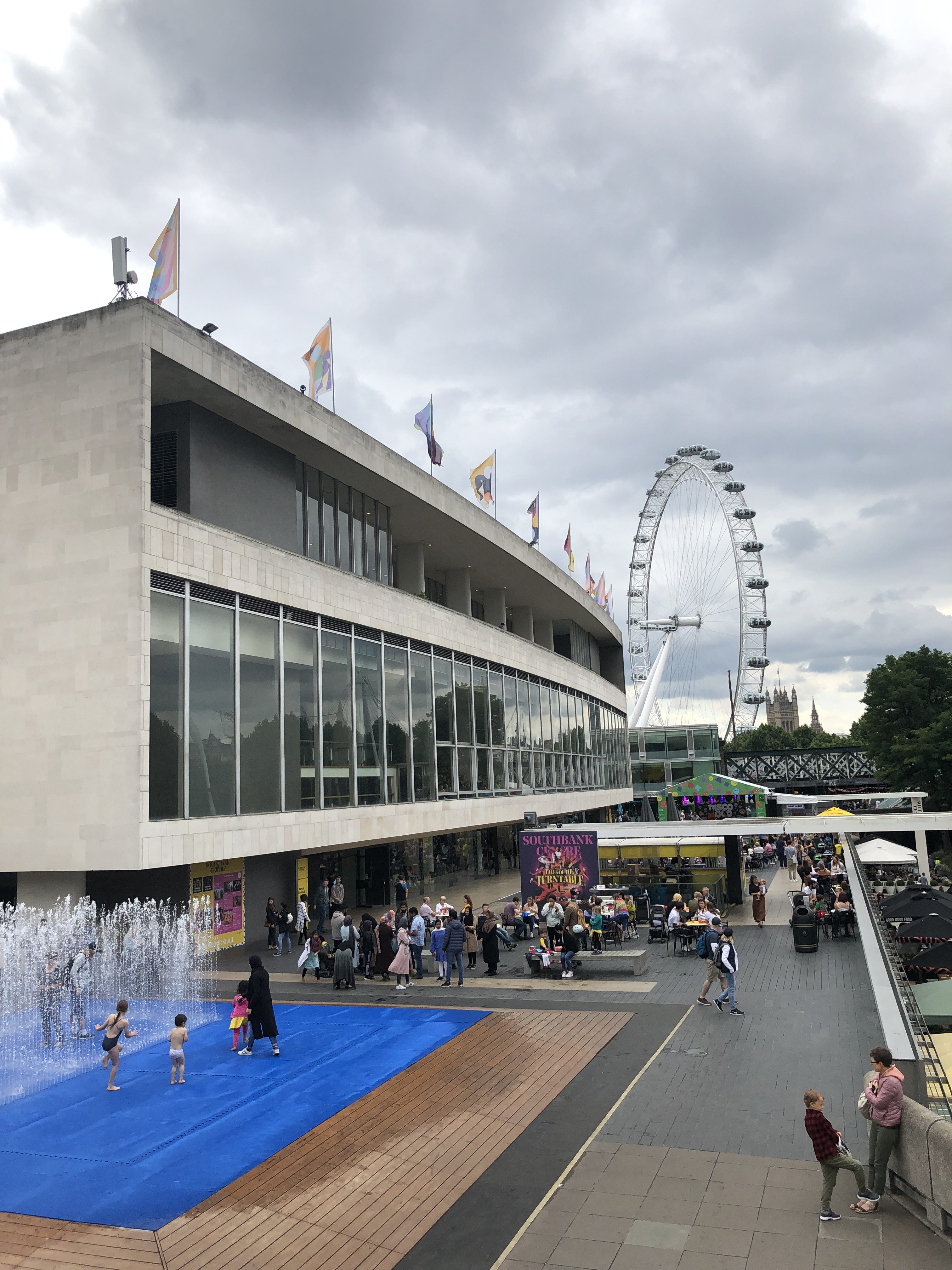
There was a little stage in the middle of the exterior plaza where a man with a microphone was MC-ing a children’s hula hooping contest. His excitement was surely enough to stop passersby for a minute. As the kids were having their fun, he noticed one girl who was doing the Macarena whilst hula hooping. In his outgoing spirit, he pointed the girl out to the crowd and joyfully invited her to come on stage so the spectators could get a better sense of her talent. Every single person appeared to be having a good time. This instance set the mood of the rest of my exploration of the Royal Festival Hall.
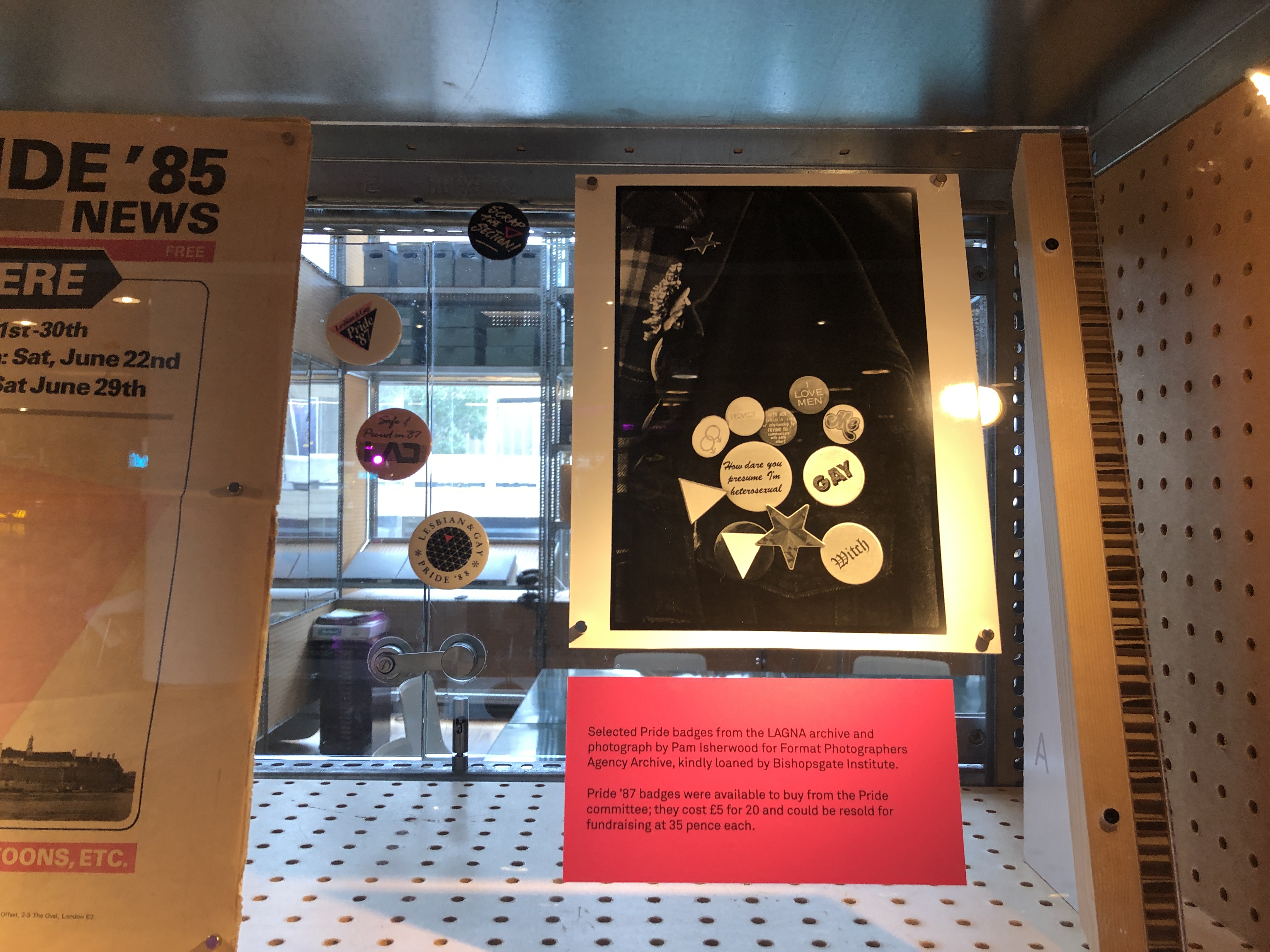
Inside of the building, it quickly became apparent to me that this space had been an essential hub for truly anyone in the community to gather. The Unknown Cityexpresses a clear sense of how the building serves to do this by saying, “There is no requirement to become a consumer, no obligation to follow a predetermined route through the building to some ultimate goal.” No one wants to be told how to use or how to move through a building. At the Royal Festival Hall, it felt like no matter what your role was in the community, you were welcomed. I notice in several glass cases inside the Hall, archives of LGBT Pride marketing. There was everything from newspaper articles to old buttons from some of the earliest celebrations of Pride. It appeared to me that the Royal Festival Hall was a place where these marginalized people could gather in order to feel that they belonged to a community.
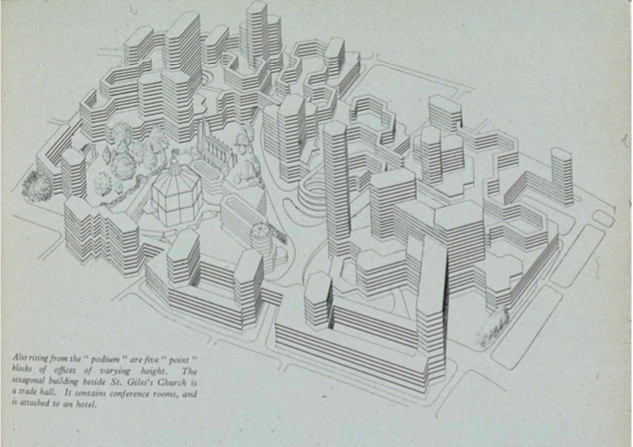
Communities are not especially difficult to create or even maintain. However, they do require spaces that are welcoming and built for the function of the people. At the Barbican, there was a strong disconnect to the outside community. Despite the fact that people live there, there was not a clear sense of flow from in and out of the more public areas of the complex. Once we made it to the inner part of the Barbican, I was certainly struck by its size, but not as much so with the sense of community. It was evident that it had been subject to gentrification, and that the Barbican name meant something different than perhaps it used to. In an image displaying a “futuristic scheme put forward by the New Barbican Committee,” it is clear to see the direction that the Barbican was inevitably headed.
Inside of the Centre, I was shocked at how much it looked like a nice hotel. The lighting was relatively dim, many people were dressed up in suits, and the movement through the building was very schemed. I walked up to a glowing white structure and noticed many bottles hanging upside down from the installation. On the bottom were two robotic arms working in tandem to make cocktails. Although this was an interesting site, the lack of human participation made me move on through the building. Another element that caught my eye were the pride flags with the word Barbican printed in big white letters. It was interesting to see the difference between the active sense of pride at the Royal Festival Hall, and there. Was this an expression of solidarity or some kind of corporate ploy?
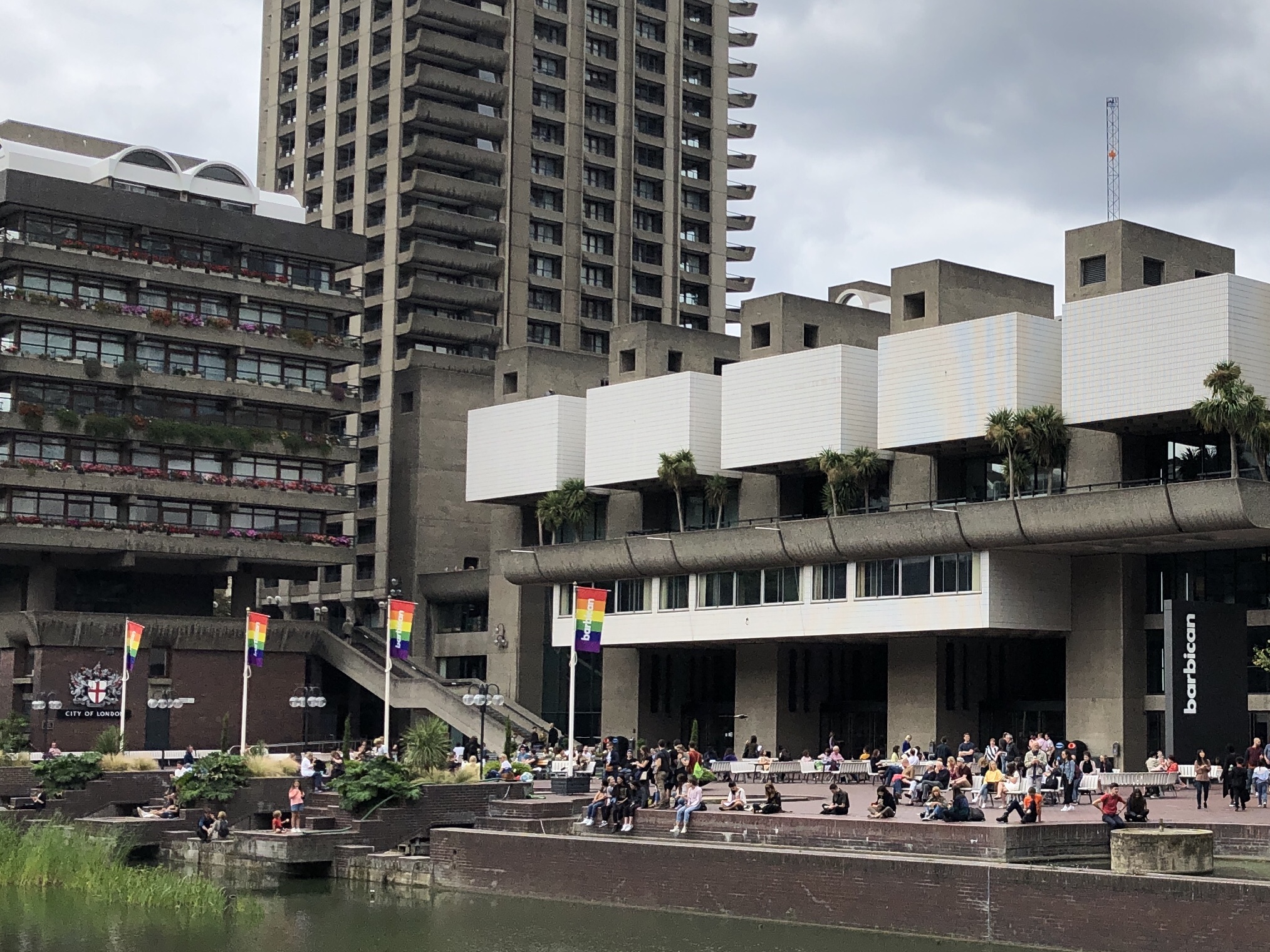
In visiting both of these locations, it was interesting to see their vastly different operations taking place. At The Royal Festival Hall, “the owner of the building is none other than the subject,” as it is written in The Unknown City; while, at the barbican, you quickly become part of the elite society that they have created.
 City As Text