When you consider the history and infrastructure of European cities, it certainly becomes evident that there is a vast record of the places that remains unseen today. Some of these early ruins encompass a complicated or undesirable past. As Peter Ackroyd writes in London the Biogrpaphy, there will be “moments of revelation, when the city will be seen to harbor the secrets of the human world.” Some cities may choose to either commemorate, or disregard these pieces and places of history, and which they choose is often very telling of their culture.
There are many examples of this throughout London, with buildings being erected over burial sites, or places of religious significance. Sites such as Liverpool Street Station deal with their history in a very curious way, and it struck me as quite a problem. I felt as though I was on some sort of top-secret mission trying to find this blue plaque that was supposed to recount the history of Liverpool Street Station as the former site of Bethlem Royal Hospital. Getting off the tube and emerging into the crowded station, I was readily prepared for a search that would not be easy. However, I was not expecting to have to scan the entire premise of the large station, which resembled a shopping mall in size.
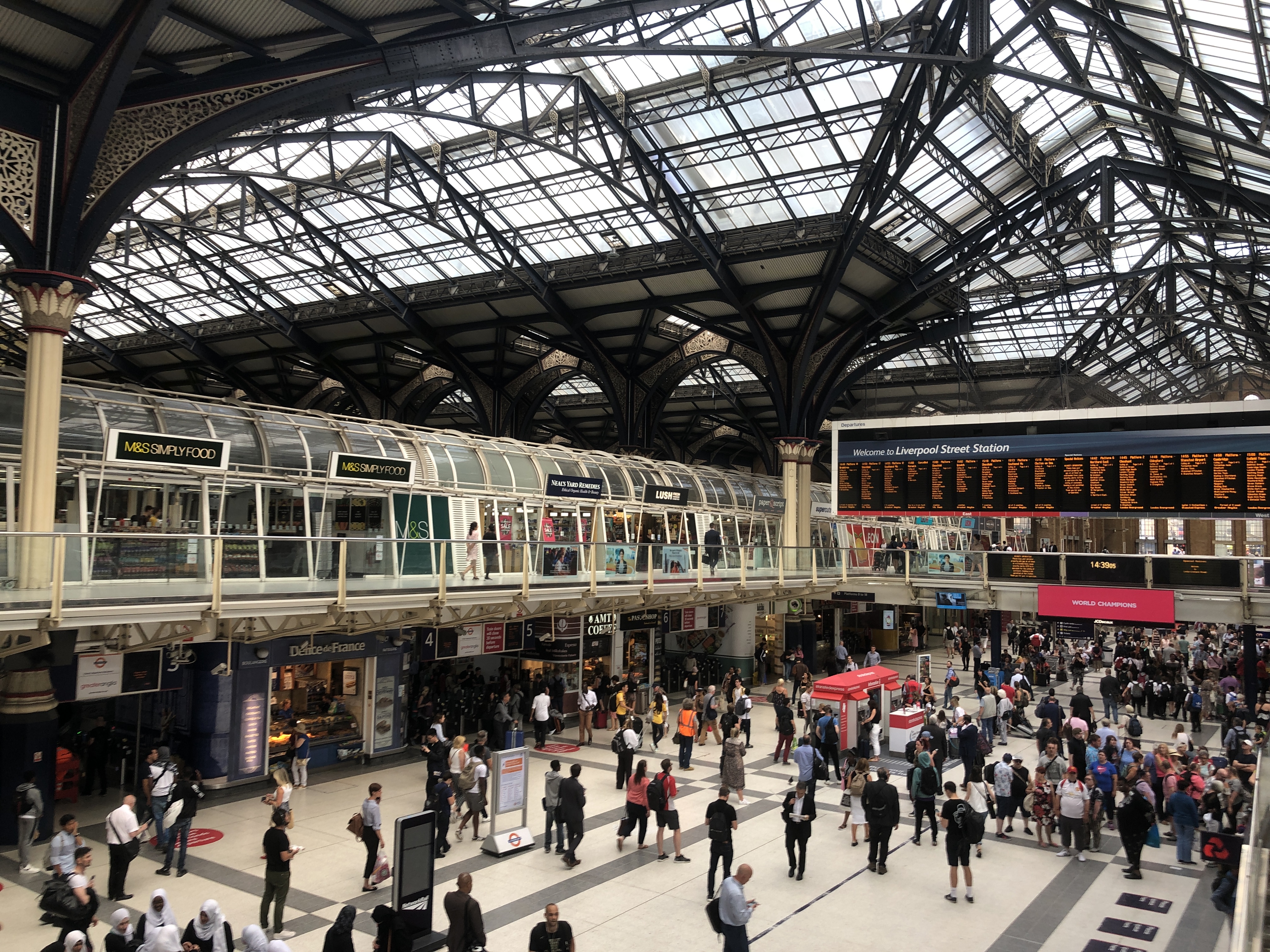
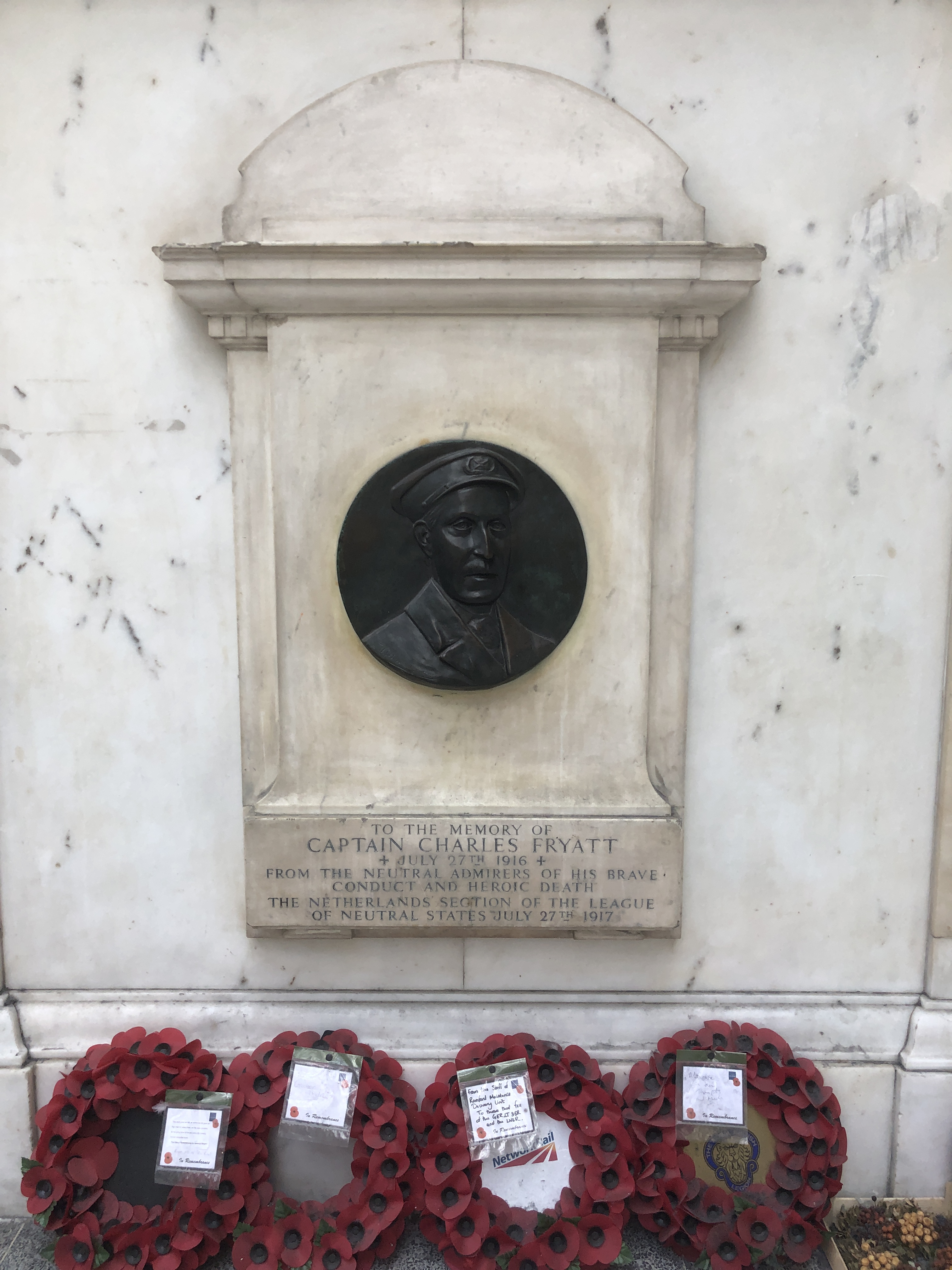
I scoured the upper floor of the station, only to find signs that read CCTV and other information, which was useless to me. I began to notice a significant amount of commemorative plaques for captains and field marshals. There was even one for the queen for opening the Liverpool Street Station. I noticed some people, probably tourists, standing around the plaques and reading them. Even if they were not interested in the history, the mere existence of the plaques shows that the city was attempting to honor these people and their stories. I thought surely the Bethlem plaque had to be placed amongst these other significant historical references, but it was nowhere to be seen.
After a defeat, I resigned to lunch. To my surprise, the right turn I made around the station brought me to exactly where I needed. Turns out my decision to get lunch was not such a defeat. I noticed that a man and a woman where standing next to each other practically covering the sign. Had they even read it? Did the even know it was there? I shyly asked them to move so I could get a picture, and they seemed a little confused. And that was it. All of the vast history of Bethlem in one tiny blue plaque, insignificant enough to be covered by the heads of waiting pedestrians.
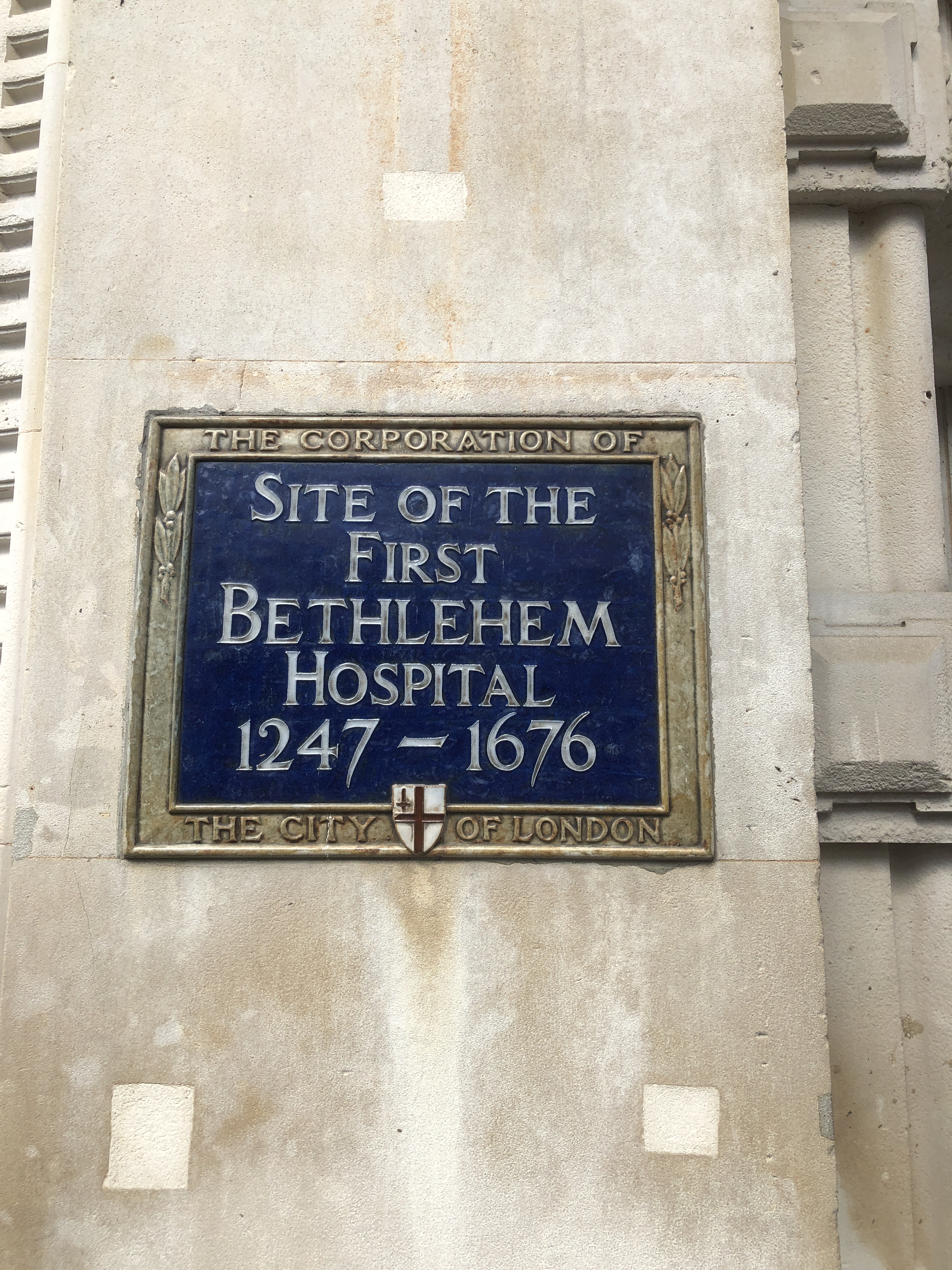
Though, as I considered the multi-facetted history of Bethlem, it became more apparent why Londoners perhaps collectively disregard its unseen past. Not only was Bethlem a place for the mentally ill, it was also used to house the physically disabled, people with epilepsy, and pretty much anyone who was deemed unfit for regular society. So, as it would be, much of the history of Bethlem remains unseen, and untold.
 City As Text