Be yourself; Everyone else is already taken.
— Oscar Wilde.
This is the first post on my new blog. I’m just getting this new blog going, so stay tuned for more. Subscribe below to get notified when I post new updates.
Be yourself; Everyone else is already taken.
— Oscar Wilde.
This is the first post on my new blog. I’m just getting this new blog going, so stay tuned for more. Subscribe below to get notified when I post new updates.
When you consider the history and infrastructure of European cities, it certainly becomes evident that there is a vast record of the places that remains unseen today. Some of these early ruins encompass a complicated or undesirable past. As Peter Ackroyd writes in London the Biogrpaphy, there will be “moments of revelation, when the city will be seen to harbor the secrets of the human world.” Some cities may choose to either commemorate, or disregard these pieces and places of history, and which they choose is often very telling of their culture.
There are many examples of this throughout London, with buildings being erected over burial sites, or places of religious significance. Sites such as Liverpool Street Station deal with their history in a very curious way, and it struck me as quite a problem. I felt as though I was on some sort of top-secret mission trying to find this blue plaque that was supposed to recount the history of Liverpool Street Station as the former site of Bethlem Royal Hospital. Getting off the tube and emerging into the crowded station, I was readily prepared for a search that would not be easy. However, I was not expecting to have to scan the entire premise of the large station, which resembled a shopping mall in size.
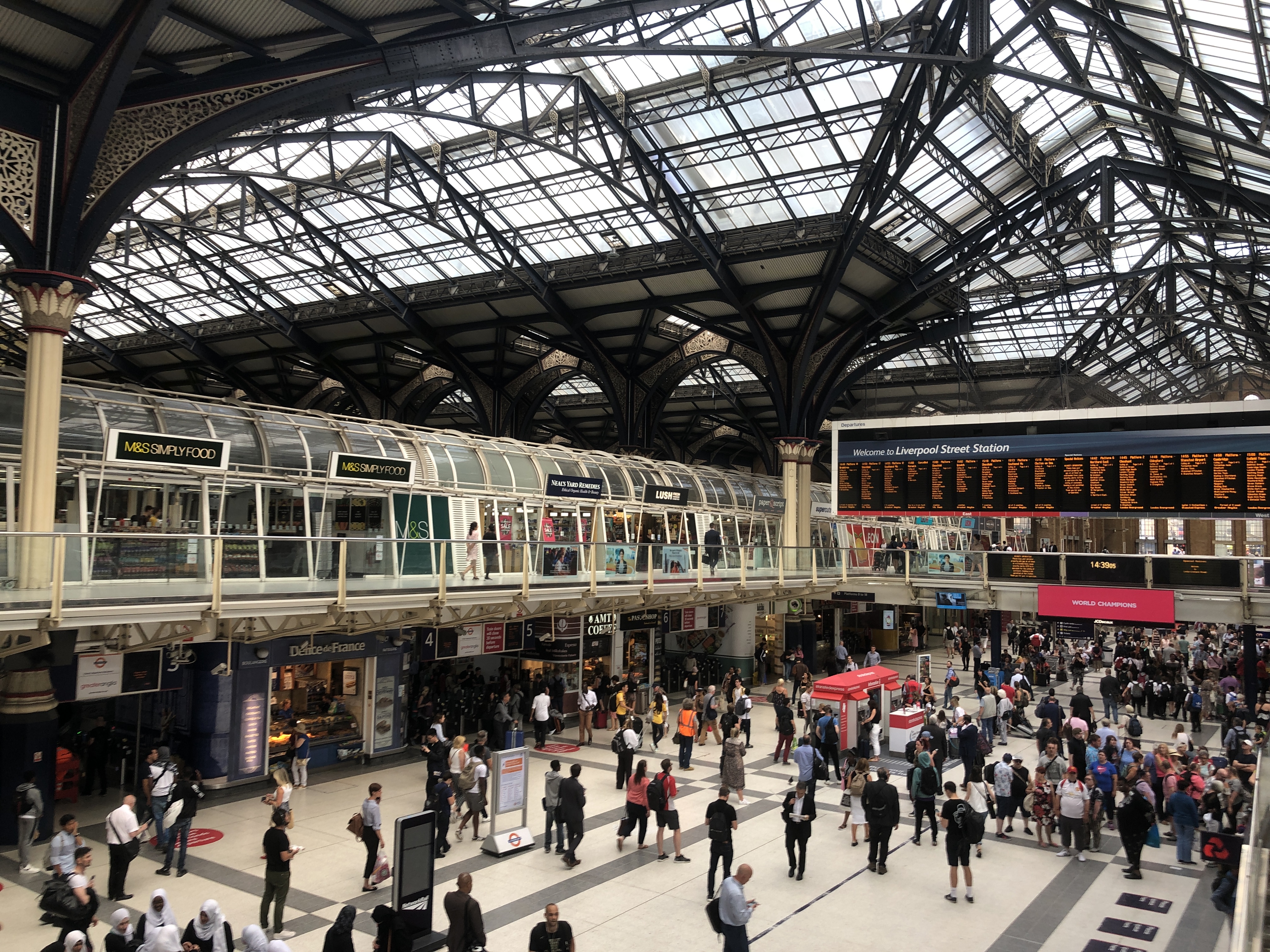
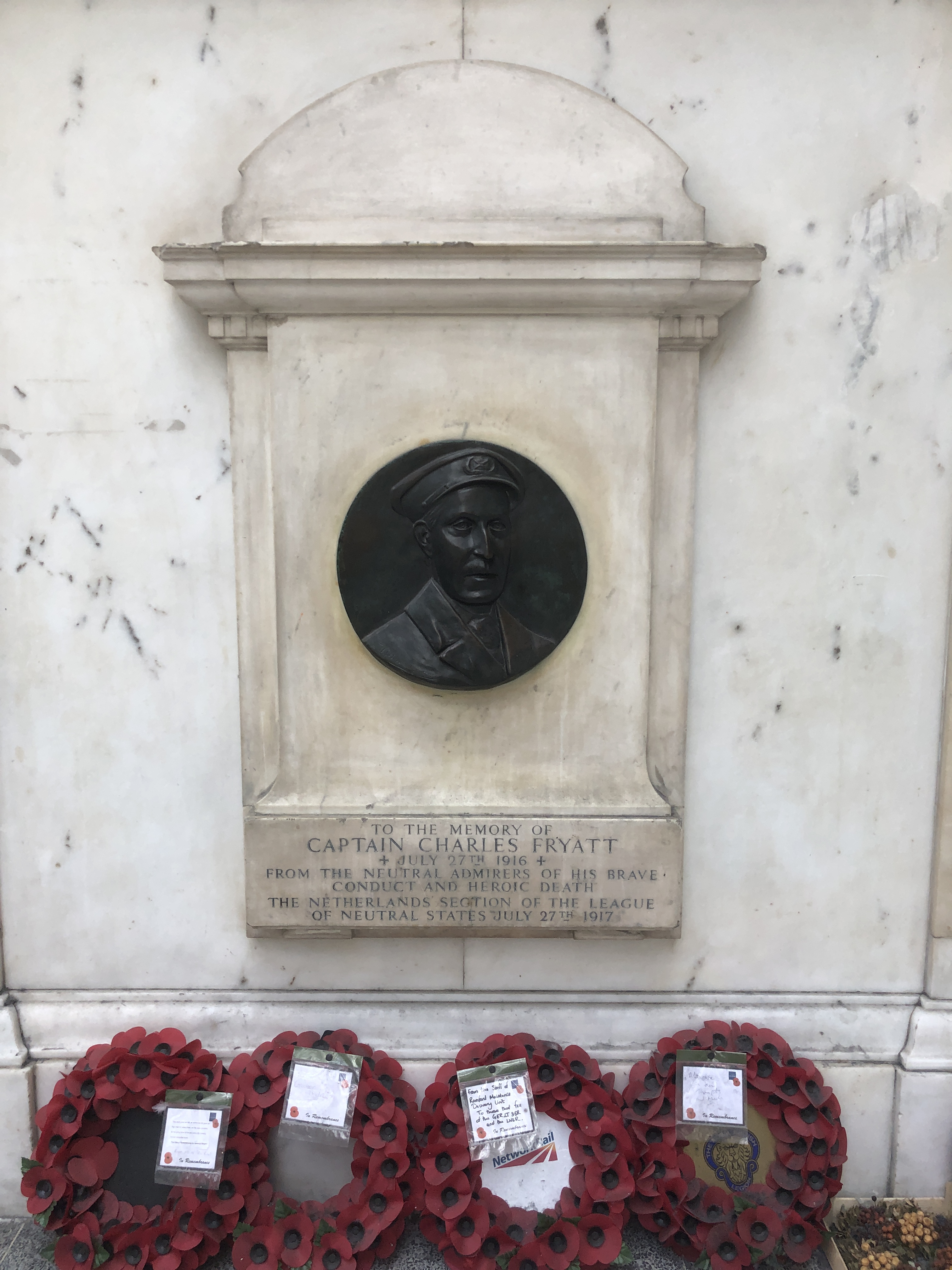
I scoured the upper floor of the station, only to find signs that read CCTV and other information, which was useless to me. I began to notice a significant amount of commemorative plaques for captains and field marshals. There was even one for the queen for opening the Liverpool Street Station. I noticed some people, probably tourists, standing around the plaques and reading them. Even if they were not interested in the history, the mere existence of the plaques shows that the city was attempting to honor these people and their stories. I thought surely the Bethlem plaque had to be placed amongst these other significant historical references, but it was nowhere to be seen.
After a defeat, I resigned to lunch. To my surprise, the right turn I made around the station brought me to exactly where I needed. Turns out my decision to get lunch was not such a defeat. I noticed that a man and a woman where standing next to each other practically covering the sign. Had they even read it? Did the even know it was there? I shyly asked them to move so I could get a picture, and they seemed a little confused. And that was it. All of the vast history of Bethlem in one tiny blue plaque, insignificant enough to be covered by the heads of waiting pedestrians.
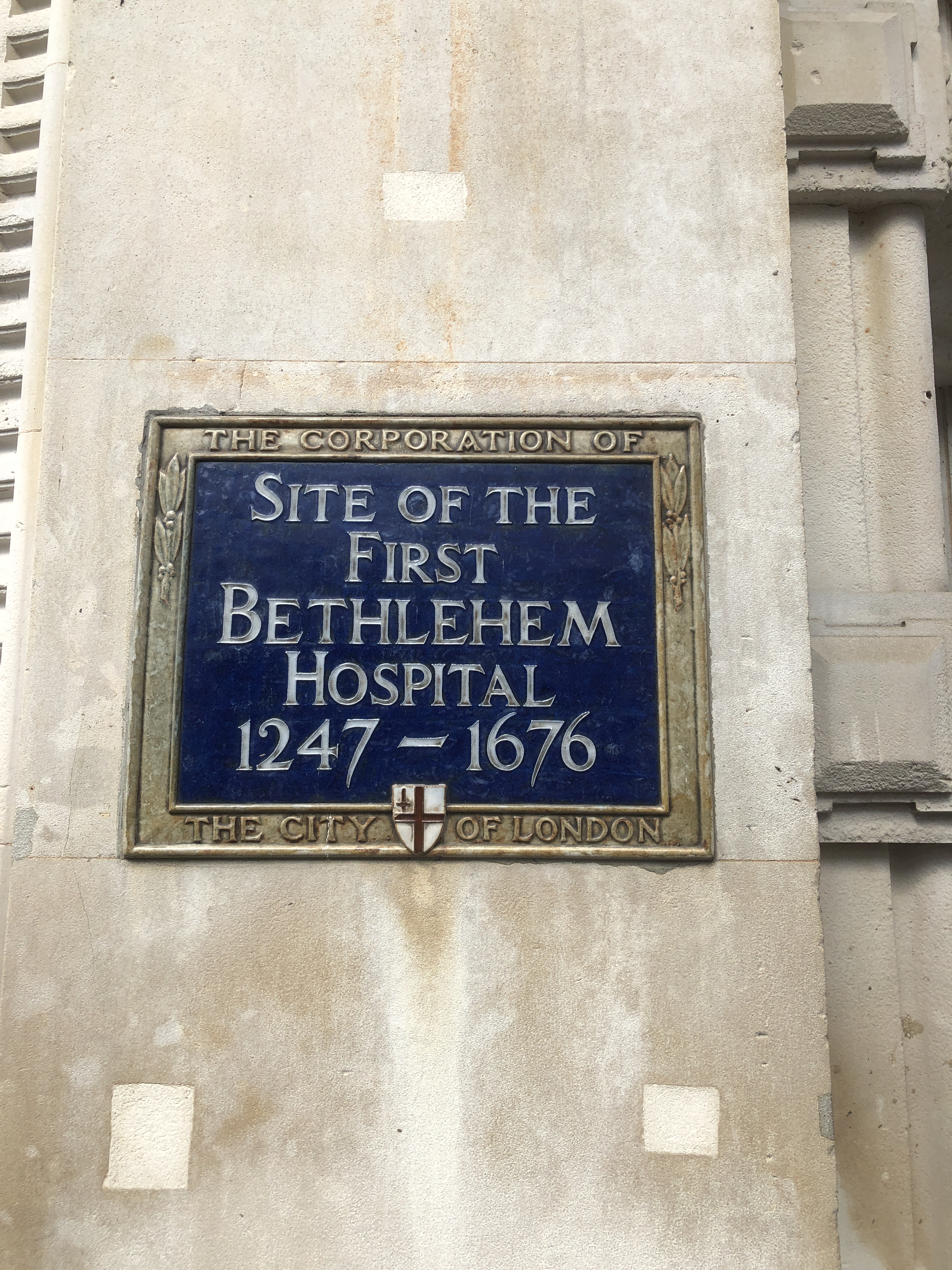
Though, as I considered the multi-facetted history of Bethlem, it became more apparent why Londoners perhaps collectively disregard its unseen past. Not only was Bethlem a place for the mentally ill, it was also used to house the physically disabled, people with epilepsy, and pretty much anyone who was deemed unfit for regular society. So, as it would be, much of the history of Bethlem remains unseen, and untold.
The walk across the Golden Jubilee Bridge reminded me of the bridge at Tempe Town Lake. As I got closer to the other side, however, it was very clear that I was nowhere near my college town. I gazed up at the relatively insignificant exterior to the letters that read Royal Festival Hall. But I could not possibly hold my gaze for long, because the amount of excitement and activity going on around me was overwhelming. I did not know where to look first.
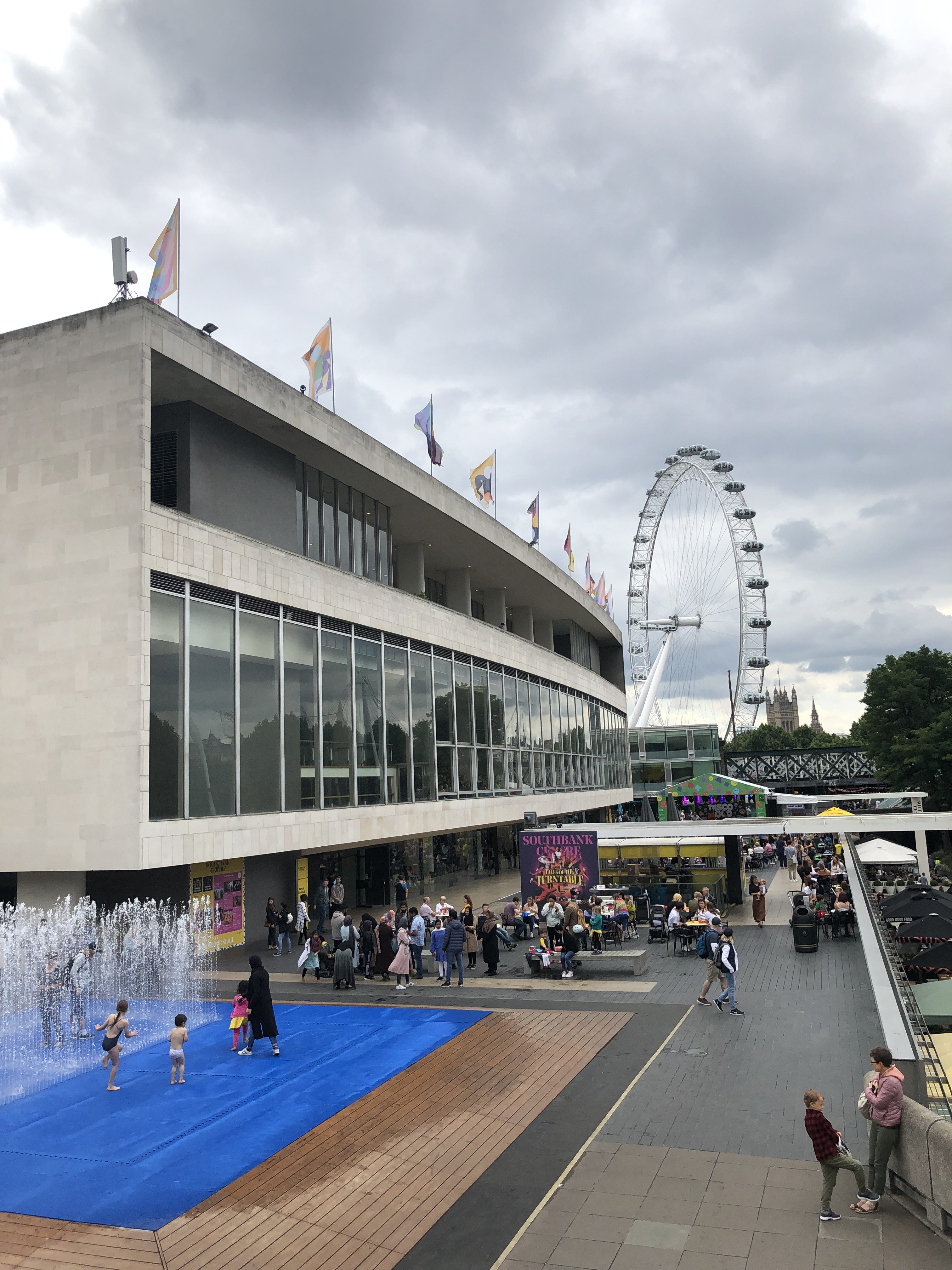
There was a little stage in the middle of the exterior plaza where a man with a microphone was MC-ing a children’s hula hooping contest. His excitement was surely enough to stop passersby for a minute. As the kids were having their fun, he noticed one girl who was doing the Macarena whilst hula hooping. In his outgoing spirit, he pointed the girl out to the crowd and joyfully invited her to come on stage so the spectators could get a better sense of her talent. Every single person appeared to be having a good time. This instance set the mood of the rest of my exploration of the Royal Festival Hall.
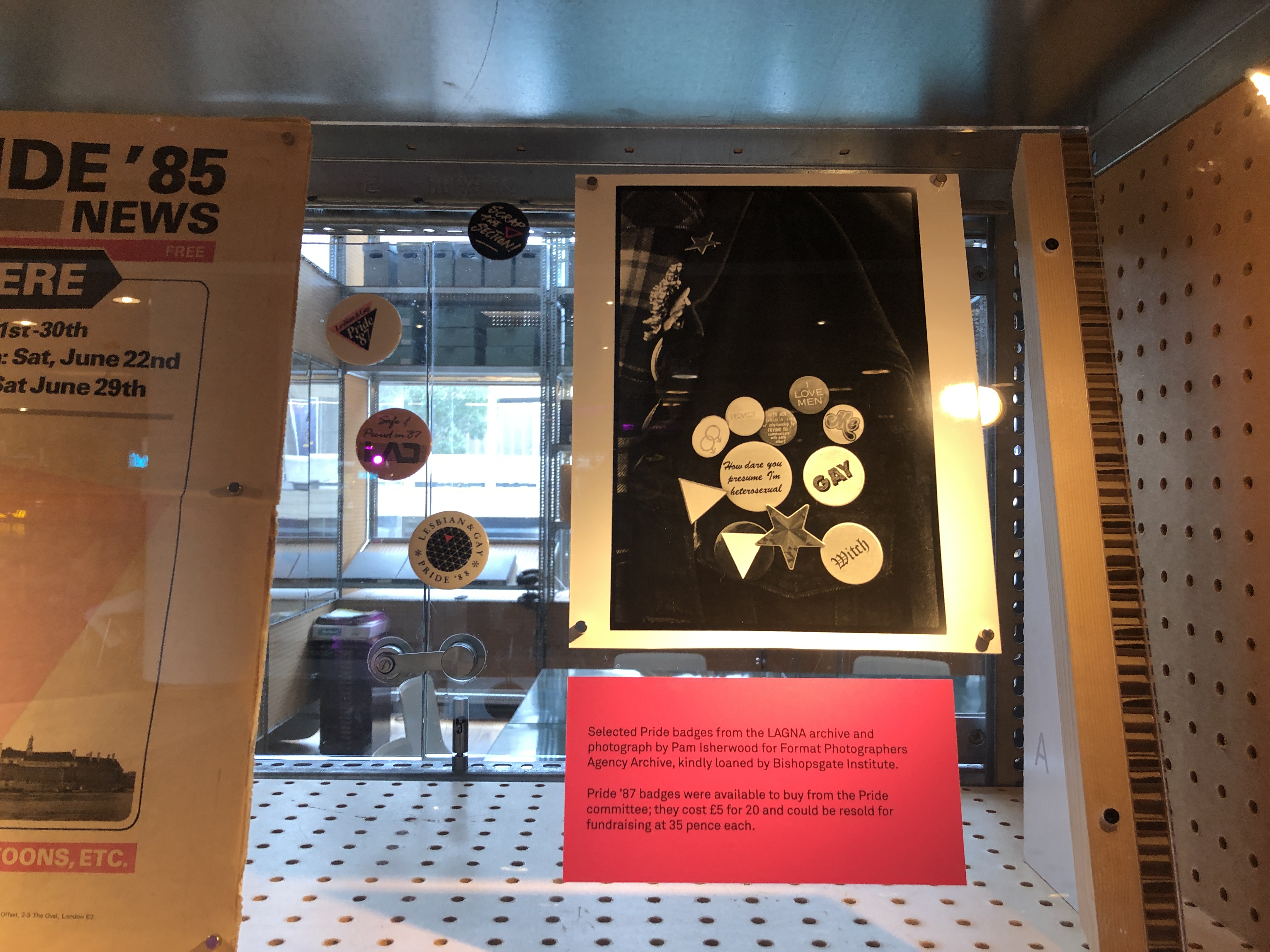
Inside of the building, it quickly became apparent to me that this space had been an essential hub for truly anyone in the community to gather. The Unknown Cityexpresses a clear sense of how the building serves to do this by saying, “There is no requirement to become a consumer, no obligation to follow a predetermined route through the building to some ultimate goal.” No one wants to be told how to use or how to move through a building. At the Royal Festival Hall, it felt like no matter what your role was in the community, you were welcomed. I notice in several glass cases inside the Hall, archives of LGBT Pride marketing. There was everything from newspaper articles to old buttons from some of the earliest celebrations of Pride. It appeared to me that the Royal Festival Hall was a place where these marginalized people could gather in order to feel that they belonged to a community.
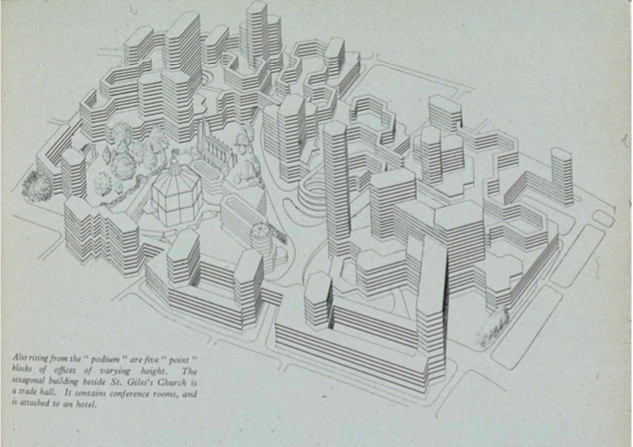
Communities are not especially difficult to create or even maintain. However, they do require spaces that are welcoming and built for the function of the people. At the Barbican, there was a strong disconnect to the outside community. Despite the fact that people live there, there was not a clear sense of flow from in and out of the more public areas of the complex. Once we made it to the inner part of the Barbican, I was certainly struck by its size, but not as much so with the sense of community. It was evident that it had been subject to gentrification, and that the Barbican name meant something different than perhaps it used to. In an image displaying a “futuristic scheme put forward by the New Barbican Committee,” it is clear to see the direction that the Barbican was inevitably headed.
Inside of the Centre, I was shocked at how much it looked like a nice hotel. The lighting was relatively dim, many people were dressed up in suits, and the movement through the building was very schemed. I walked up to a glowing white structure and noticed many bottles hanging upside down from the installation. On the bottom were two robotic arms working in tandem to make cocktails. Although this was an interesting site, the lack of human participation made me move on through the building. Another element that caught my eye were the pride flags with the word Barbican printed in big white letters. It was interesting to see the difference between the active sense of pride at the Royal Festival Hall, and there. Was this an expression of solidarity or some kind of corporate ploy?
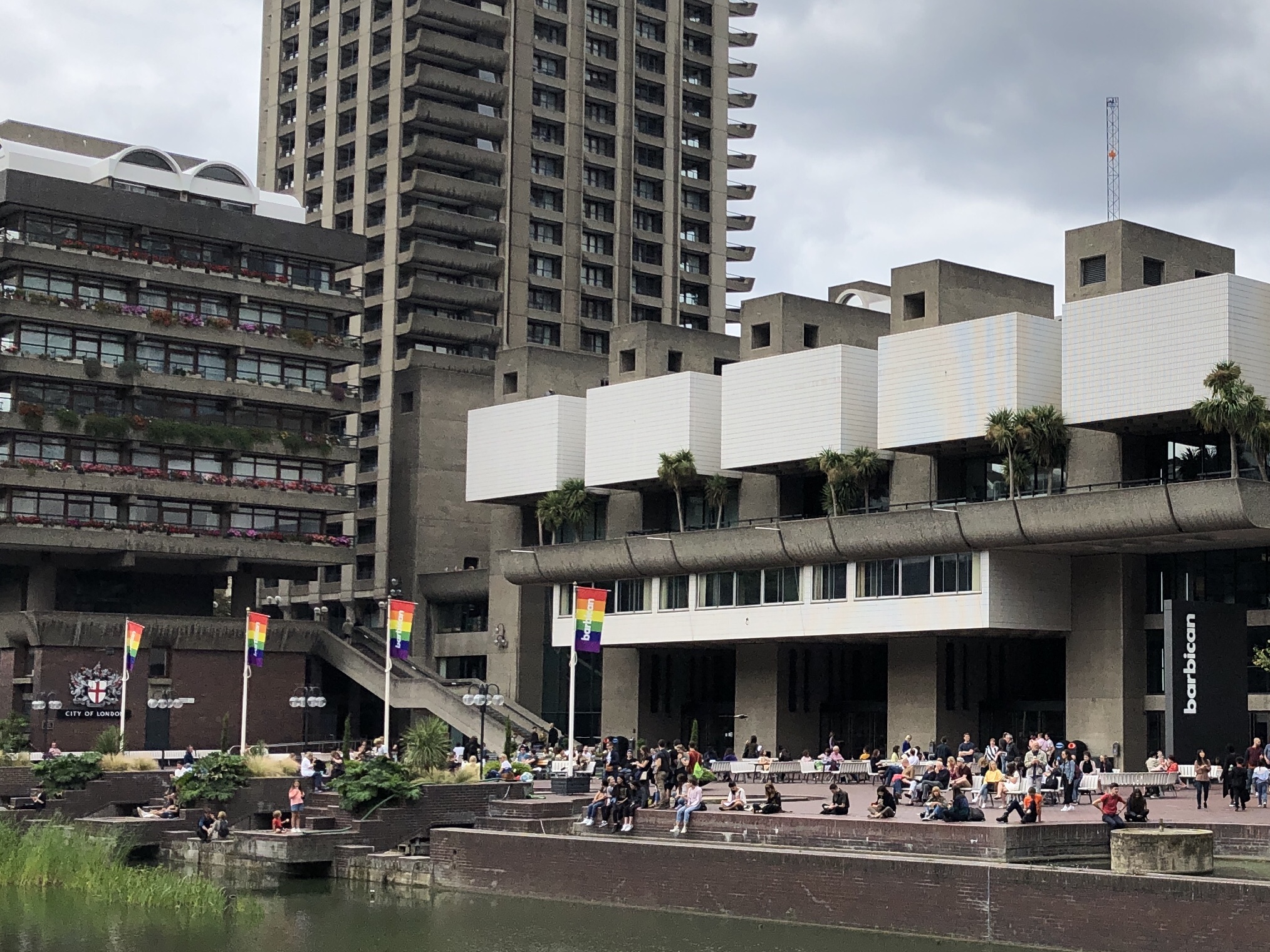
In visiting both of these locations, it was interesting to see their vastly different operations taking place. At The Royal Festival Hall, “the owner of the building is none other than the subject,” as it is written in The Unknown City; while, at the barbican, you quickly become part of the elite society that they have created.
Hopping off the train, I had no idea what to expect. Immediately, I saw what looked like any other apartment building, with sandy colored walls that now looked a shade of grey from the weathering over the years. Balconies and windows were strung with clothing and sheets, as well as over grown houseplants. Something that I noticed throughout the complex was that it all appeared very lived-in. It made me curious as to the types of people that lived there, but I tend to be very nosy about that sort of thing, and really enjoy seeing and experiencing how other people live.
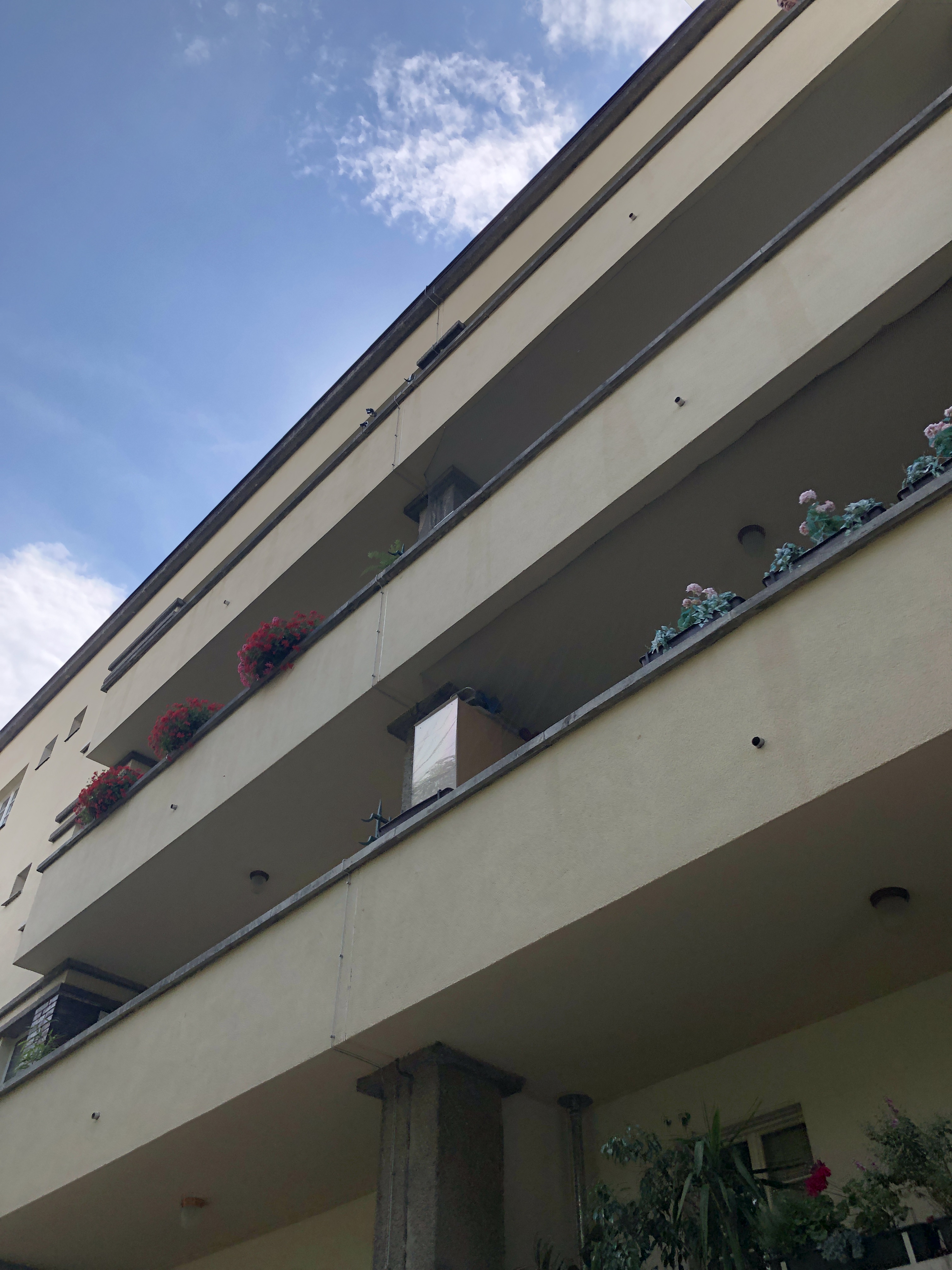
As I began to actually learn about the history of Karl Marx Hof, I was genuinely surprised by its impact, as well as the impact of other social housing complexes that arose during the period of red Vienna. These municipal housing buildings were places for everyone. Immigrants, long time citizens of Vienna, middle class families, and so many more took residence in these centers. It truly seemed as though, no matter who you were, you had hope in finding a comfortable place to live and raise a family. And with a point system in place, getting an apartment was an equitable process that did not strictly benefit the wealthy.
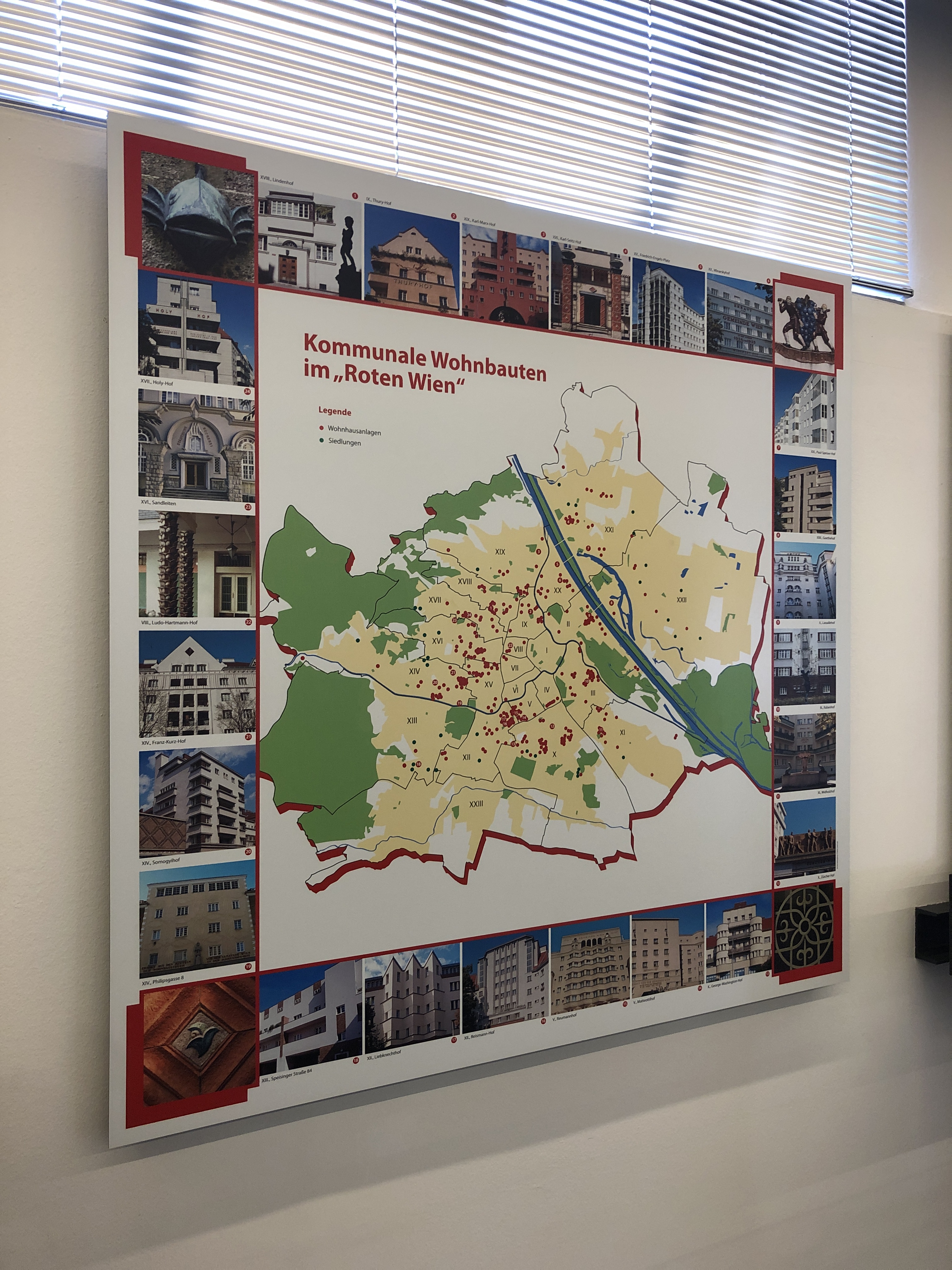
This was easy to see in having a look around Karl Marx Hof. One of the first interactions with a resident that I had was an old woman who sheepishly tried pushing past our tour group to get to the communal laundry room. She was wheeling a laundry bag behind her, and appeared to be in a bit of a hurry. Walking through the courtyards of the complex provided many opportunities for a more personal experience. At a point where the tour group was stopped, a group of children began to shuffle out of a classroom to recess. There was a teacher, and about ten students, who looked around five or six years old. As they entered the gate near their classroom, they began gazing up at us in confusion. Why was a group of young adults standing around outside of their recess area? One little boy in particular got out of his uniform line that the teacher had organized and peeked his head through the fence to get a closer look at us. Our guide noticed him, and said hello. The rest of their conversation was in German, however she did say America, which lead me to believe that he was asking her about us, and that she explained to him who we were. He proceeded to stare at us, and then said out loud in prolonged speech, “America.”
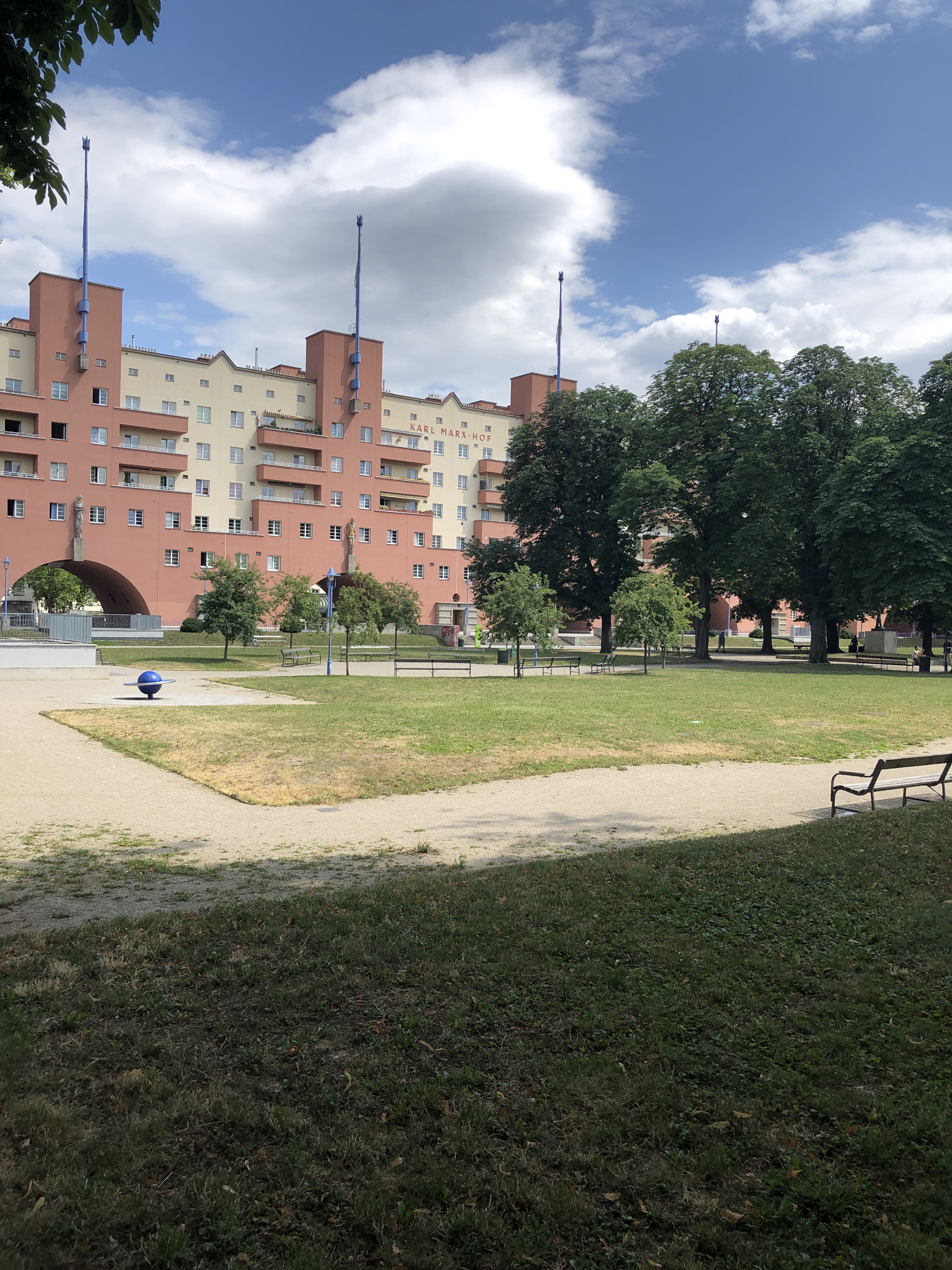
As I later thought about the nature of the people living in Karl Marx Hof today, it occurred to me that all of the people that I came by were products of the hope that was given to the people of the red Vienna period thanks to the social democrats. Without the movement, Karl Marx Hof might not have existed, and these people might not have had the strong sense of community that their home provides them with.
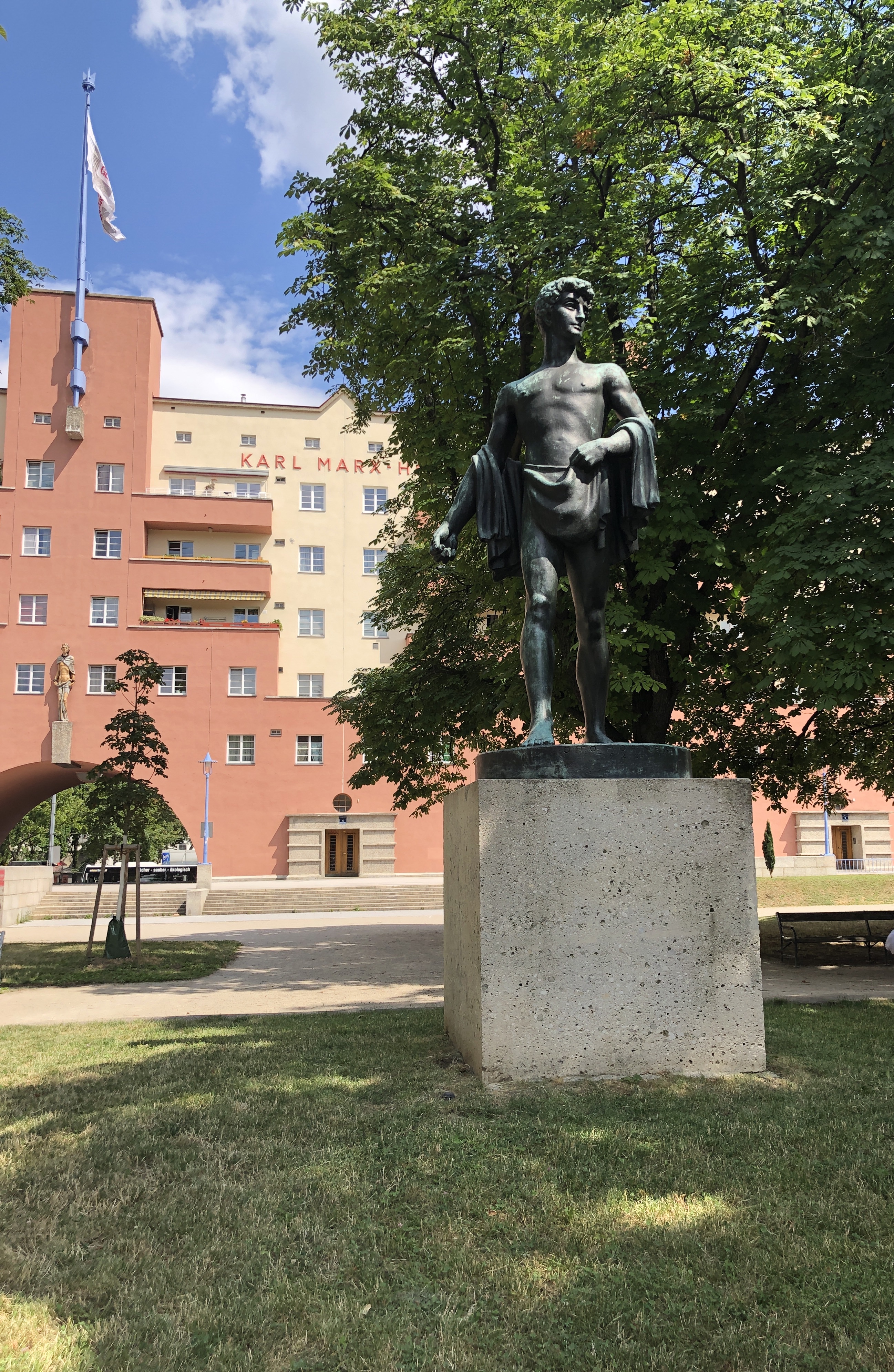
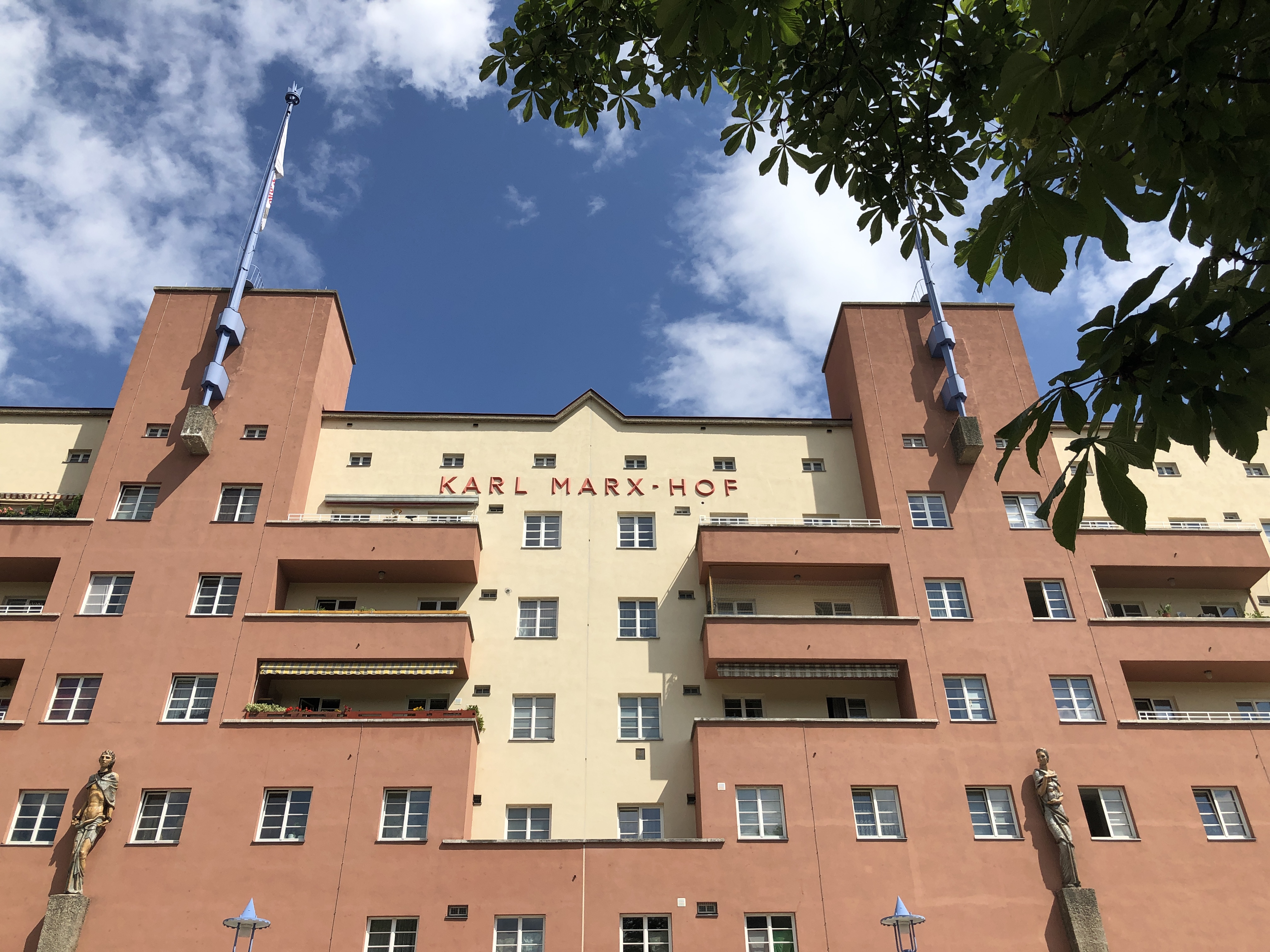
In fact, there were several symbols of hope that I noticed around the complex. One was a statue of a man breaking the chains around his wrists. This, I came to learn, was a symbol of liberation for proletariats during the red Vienna period. Another emblem of hope was a different statue of a man in one of the courtyards who appeared to be planting seeds. The significance of this statue is that the workingman is planting the seeds to grow a better future for himself and those around him. Re-Visiting Red Vienna highlights this sense of hope that municipal housing provided for the proletariats by saying, “Red Vienna gave the Viennese workers what they had voted for. It showed them that they had a voice, and that they counted.” So, what I have come to realize about this place that I perceived to be just an old apartment complex, is that it served many people as a beacon of hope for a better life.
It was a beautiful, cloudy day in Vienna, perfect for strolling through the city center. Instead of doing this however, I was spending my time eagerly in search of a mysterious underground toilet. I did not have much of an idea of what to expect, and the image I was picturing was far from the reality. I apprehensively walked down a flight of stairs to what looked like it could be a subway station, and was immediately transported to the early 1900s. Was this a bathroom or an exhibit? Every last detail was carefully considered in its design, all the way down to the golden soap dispenser.
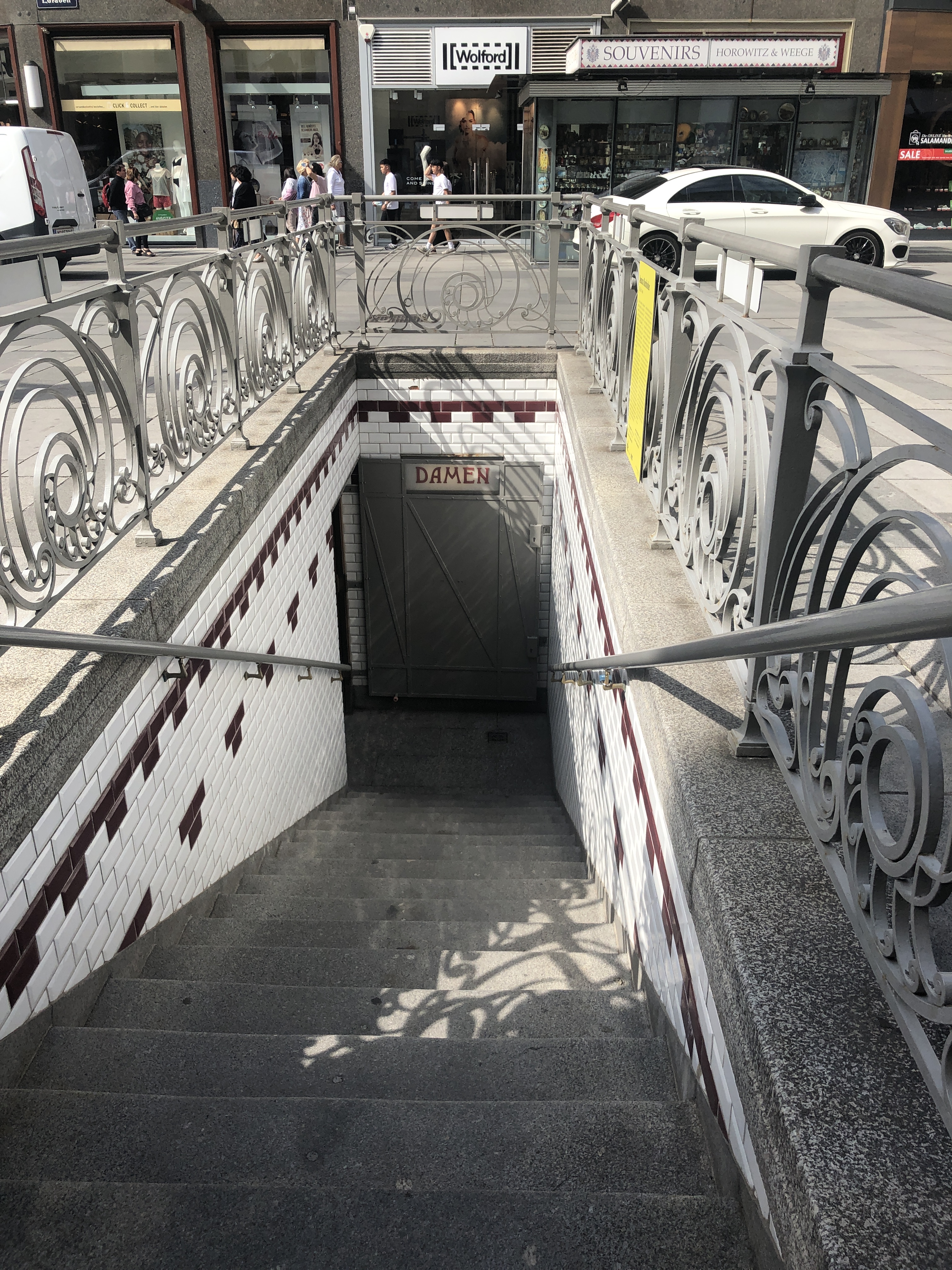
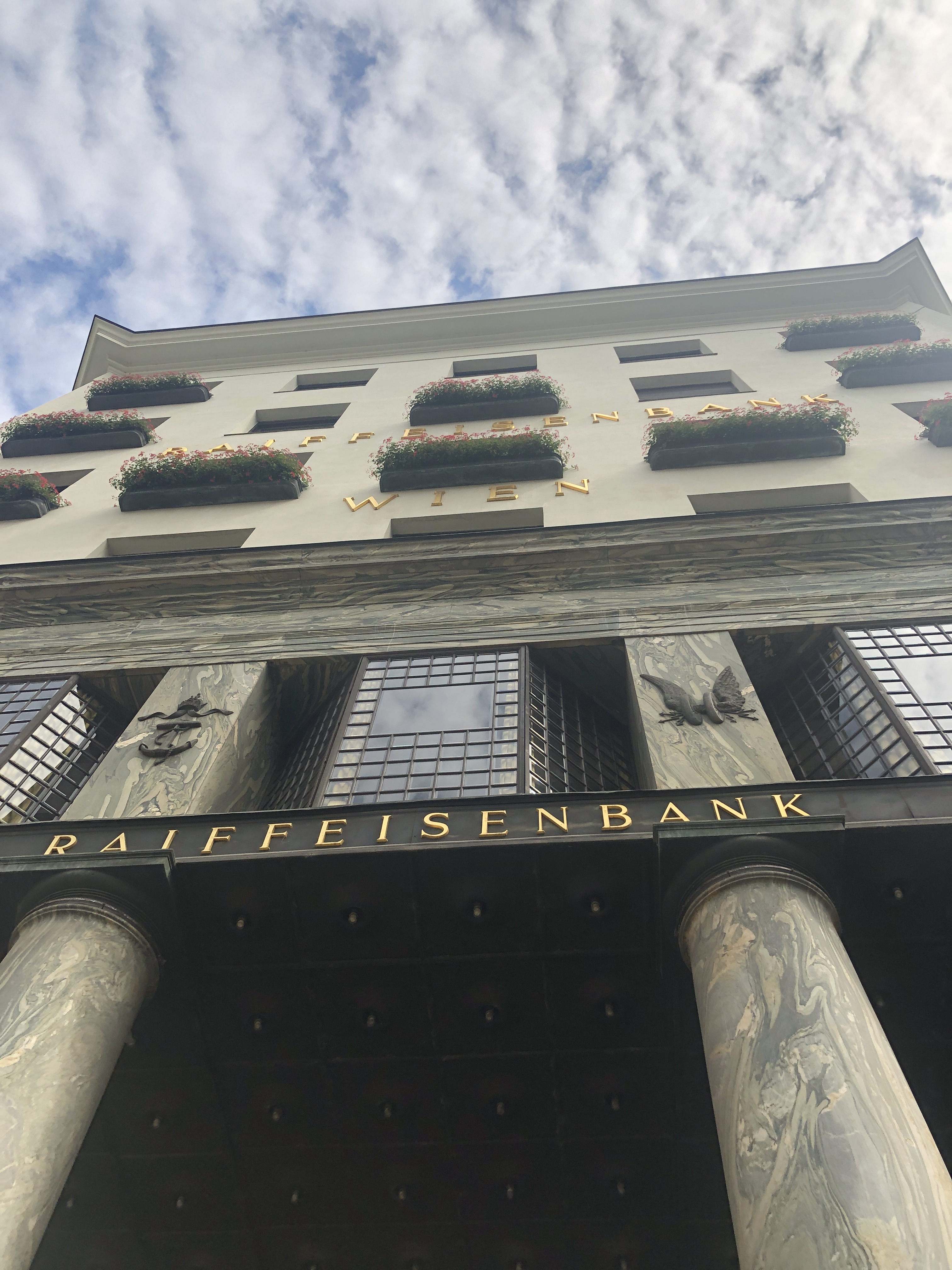
Even the experience of walking into the bathroom was fully integrated into the design. The placement of the streetlight and the red and white subway tile gave me the illusion that I was heading to the train, awaiting my ride to a new destination; but it was just a bathroom. I never imagined that a bathroom could be so completely designed in its form, and I was yet again surprised by another one of Loos’s more controversial works, the Looshaus. From the outside, I gazed upon a building that I might have simply brushed past in order to marvel at the grandeur of the Hofburg palace.
It was the inside that transformed me to a different world. As I entered, I walked along a deep emerald green rug that stretched the width of the room, and continued up the perfectly centered stair. Underneath the rug was a light wood, perhaps teak wood, placed in a hatched pattern. The rest of the front, which was the only place we were allowed to go, was covered with a darker wood that had a slight reddish hue to it. I do not know my wood types very well, but it looked to me like cherry or mahogany. Smaller details like the clock hanging above the stair, and the light fixtures throughout, were so meticulously coordinated with the rest of the design, that it they had to have been designed by Loos himself. Surely I would never have thought to put these materials together, but seeing them in harmony with one another made me realize, once again, how much Loos paid attention to the totality of his works. But as I have come to realize during my time in Vienna, he was not alone.
Visiting the Leopold museum completely changed my perspective on what the idea of a total work of art can mean. On the fourth floor of the museum, I entered into a dim room with walls painted a deep red color. On the wall there were paintings, each set in a unique, ornate golden frame. The secessionists would have hated it. As I continued making my way through, history began to shift right in front of my eyes. Soon, I found myself in a room with white walls, and I honed in on all of the work around me. It was almost completely dedicated to Joseph Hoffman’s Sanatorium. Around the walls of the room were pieces of furniture, fixtures, and other elements of the building. My initial reaction was that every piece had the exact same, distinct style. I circled back through the room and must have seen Hoffman’s name a dozen times. It all made so much sense. The middle of the room featured a scaled model of the building, and as I admired its detail, I could picture each piece of furniture and every fixture positioned throughout the Sanatorium. In another room, I saw cutlery and glassware designed by Hoffman specifically for use in that building.
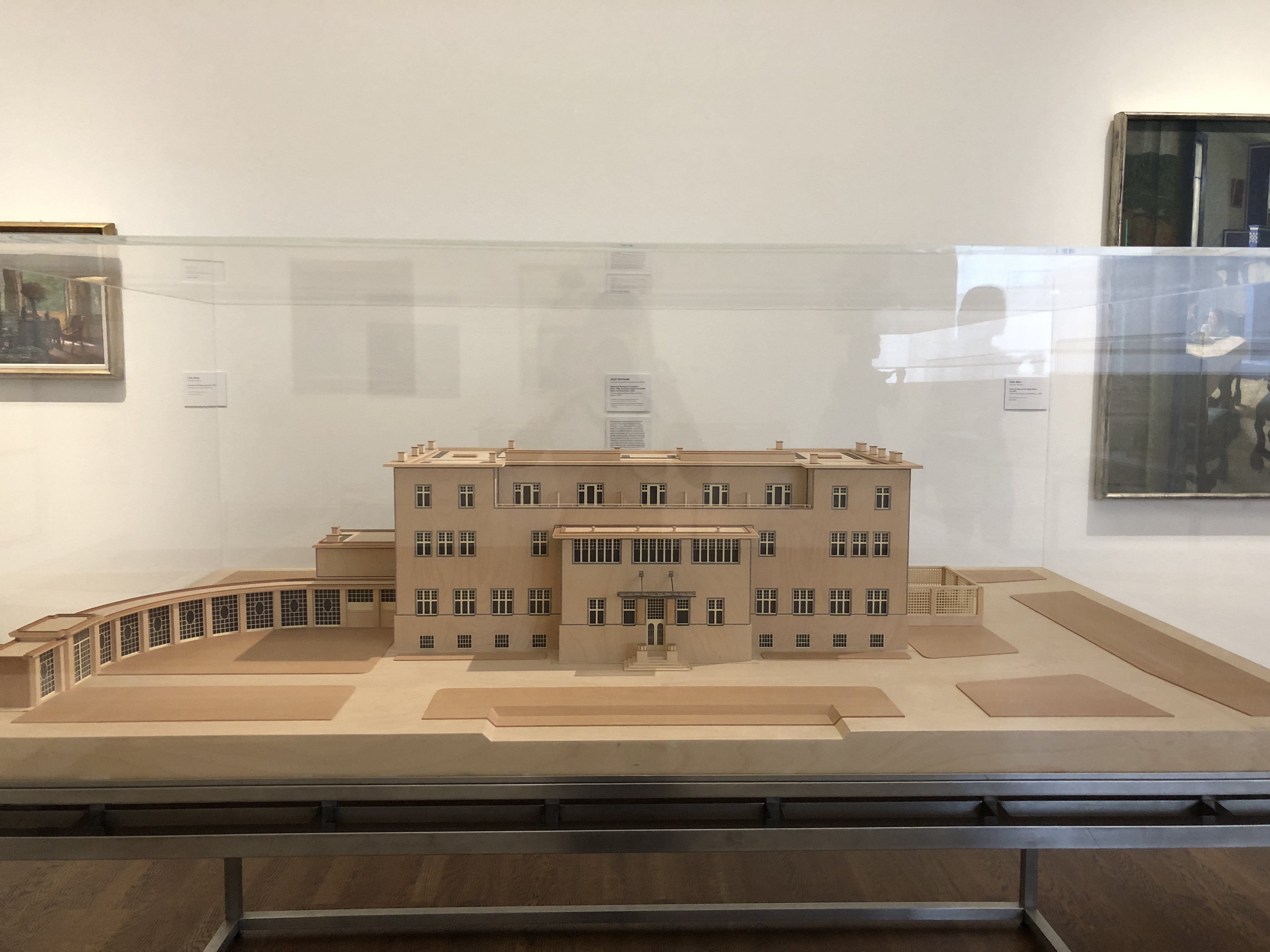
This is the physical manifestation of the total work of art; or in this case, architecture. Surely no one could be trusted to design the furniture for a building when they do not even understand what is being built. Loos and Hoffman were aware of the capabilities and restraints of their designs in both material and program; thus, they took it upon themselves to present total works of art and architecture.
My initial experience with Vienna was a very hustle and bustle city, full of people who walk with purpose to get to their destination. However, in being here for some time, I have begun to recognize a certain culture of stagnation. As I came upon St. Charles’ Church, I was amazed by its beauty. I found myself walking to and from across the front of the building in order to capture the perfect picture.
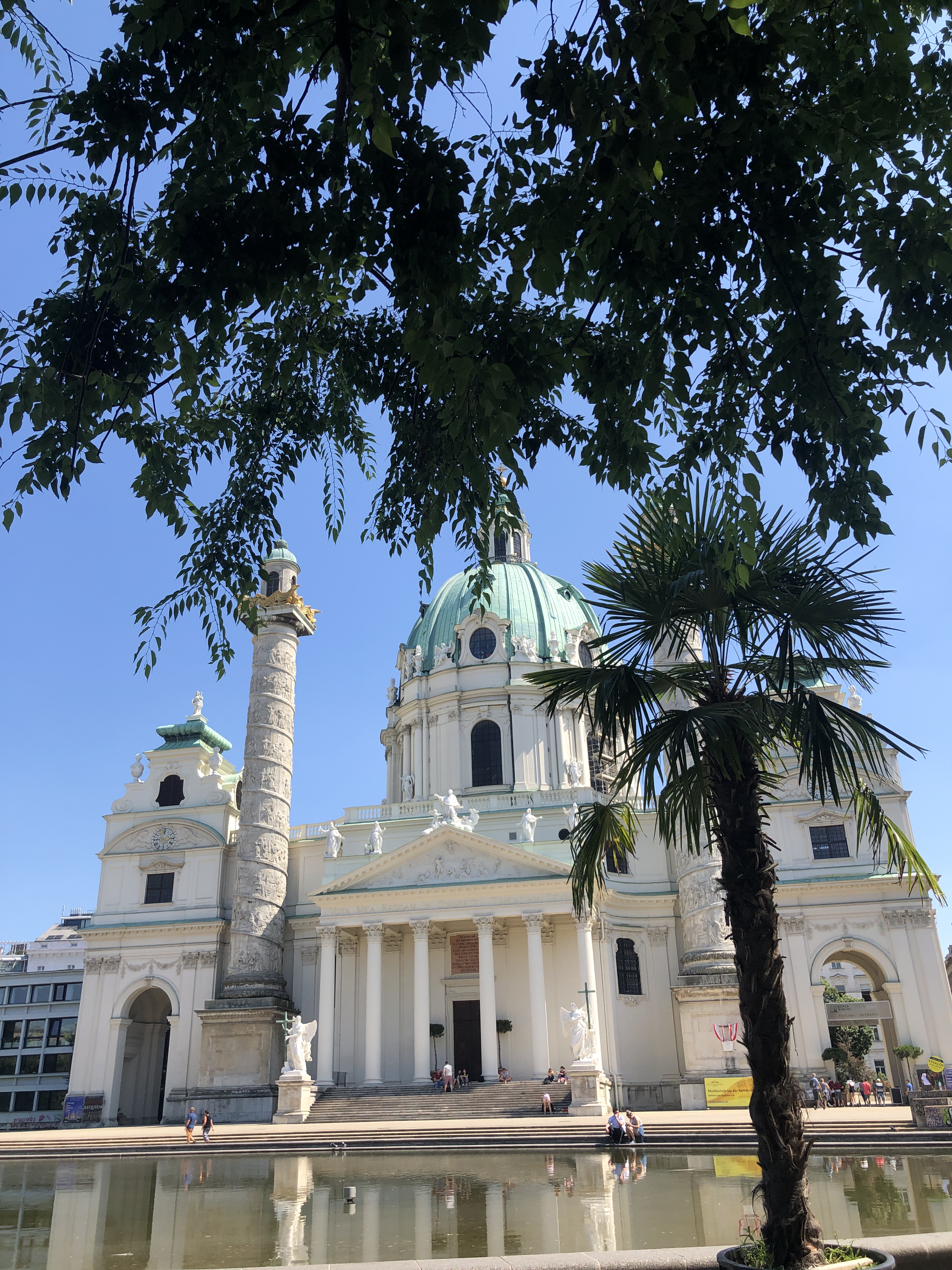
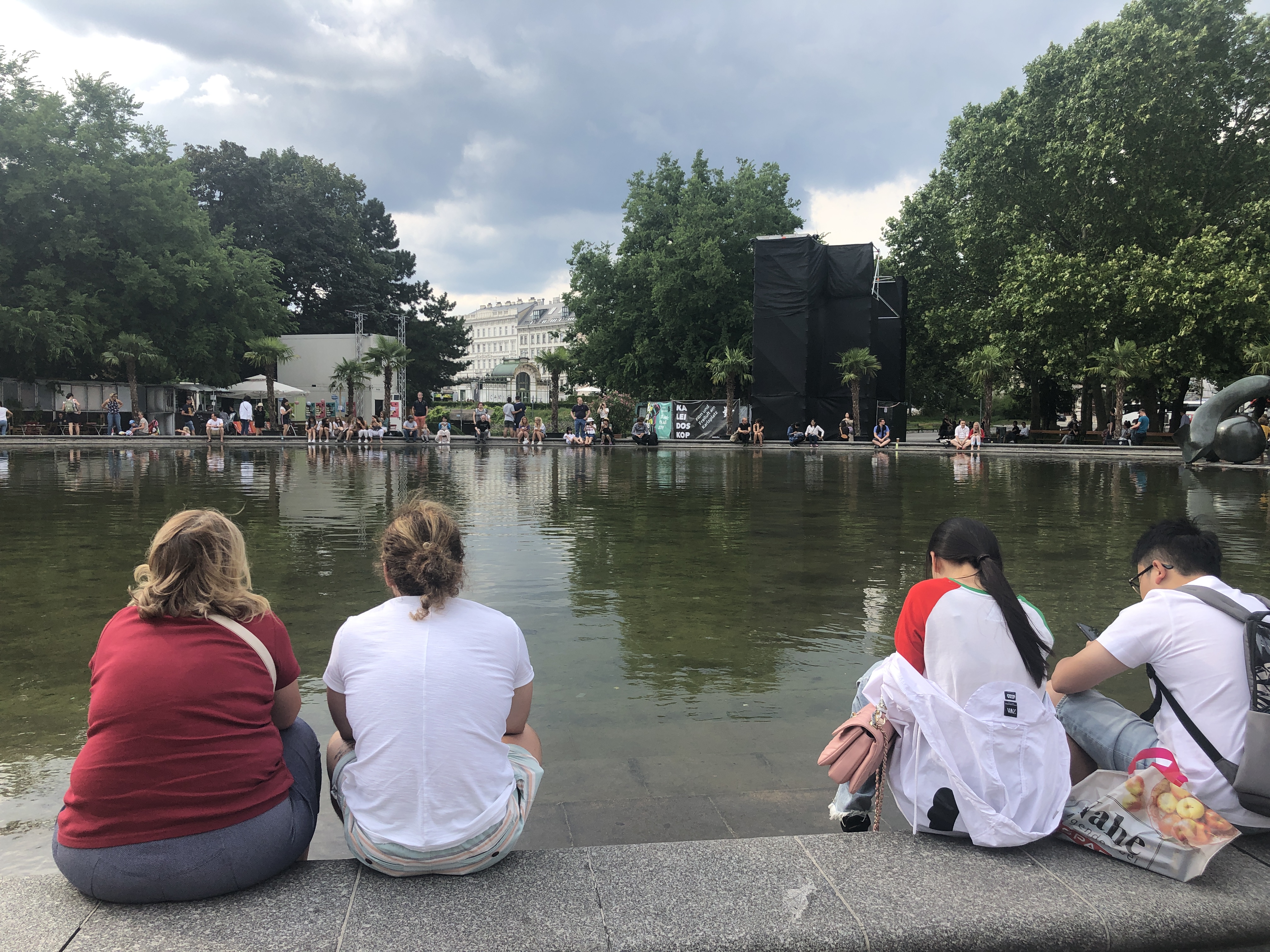
It was not until I forced myself to put my camera away and take in the marks of history that were surrounding me, that perception of the life of the Viennese people shifted. As I gazed around the circular pond, which disrupted the movement through the courtyard of St. Charles, I witnessed many people doing something that I had not before experienced up close on this trip. A woman, practically right in front of me was faced toward the pond, her dark grey capris scrunched up to her knees, as she sat peacefully reading a book. How long had she been there? Despite all of the movement happening around her, she did not appear to be conscious of any of it. Her dog, who stood obediently next to her, began to lick her exposed shin. I think he recognized how stagnant she was, and wanted some much deserved attention, but still nothing.
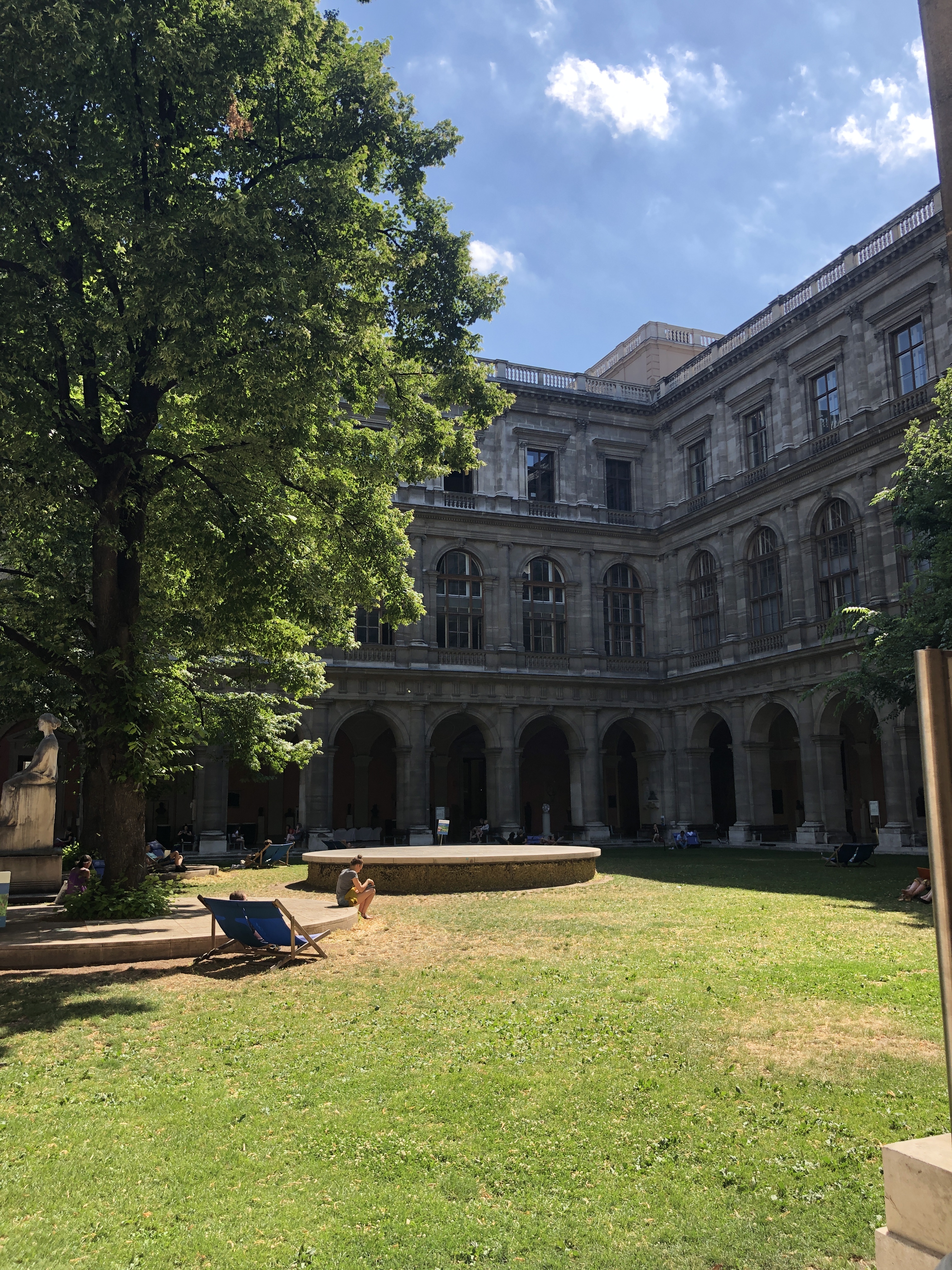
She was a younger woman, much like the people I saw at the University of Vienna. The air there was stale and smelled vaguely of cigarette smoke. Perhaps it was due to the off-season, but similar to St. Charles, I witnessed very little movement. I came upon the center courtyard, where I observed many of what I assumed to be students, sitting or lying still throughout the thick green grass. One young man appeared to be taking a nap, and with my jetlag still in full force, I began to wish it was me in that position. I did not want to disturb the peace with my curiosity and frequent movements, so I stayed on the outskirts of the courtyard.
As I was walking, I saw a middle aged woman sitting on a bench. She had with her a big black bag, which in America would seem suspicious to me, but there’s something about this relaxed culture in Vienna that did not make me feel uneasy about it. She also had in her left hand a cigarette, which she was putting out by rubbing it on the floor surrounding the courtyard. The college was such a beautiful place, so it was strange to me that someone could potentially be harming it. Although this woman exhibited small movements, I would say that she contributed to the stale, stagnant air of the place. I am definitely not one for the smell of smoke.
I prefer the movement of air, and experiencing its crispness when coupled with nature. At the Palmenhaus at Schonbrunn palace, my newfound notions of Vienna as a slow paced city were disrupted by our group of eager students. Obviously not Vienna locals, we surely do not understand the culture of stillness, especially for extended periods of time. The fascinating people that I had been observing, who remained so even with minimal movement, were nowhere to be seen at Palmenhaus.
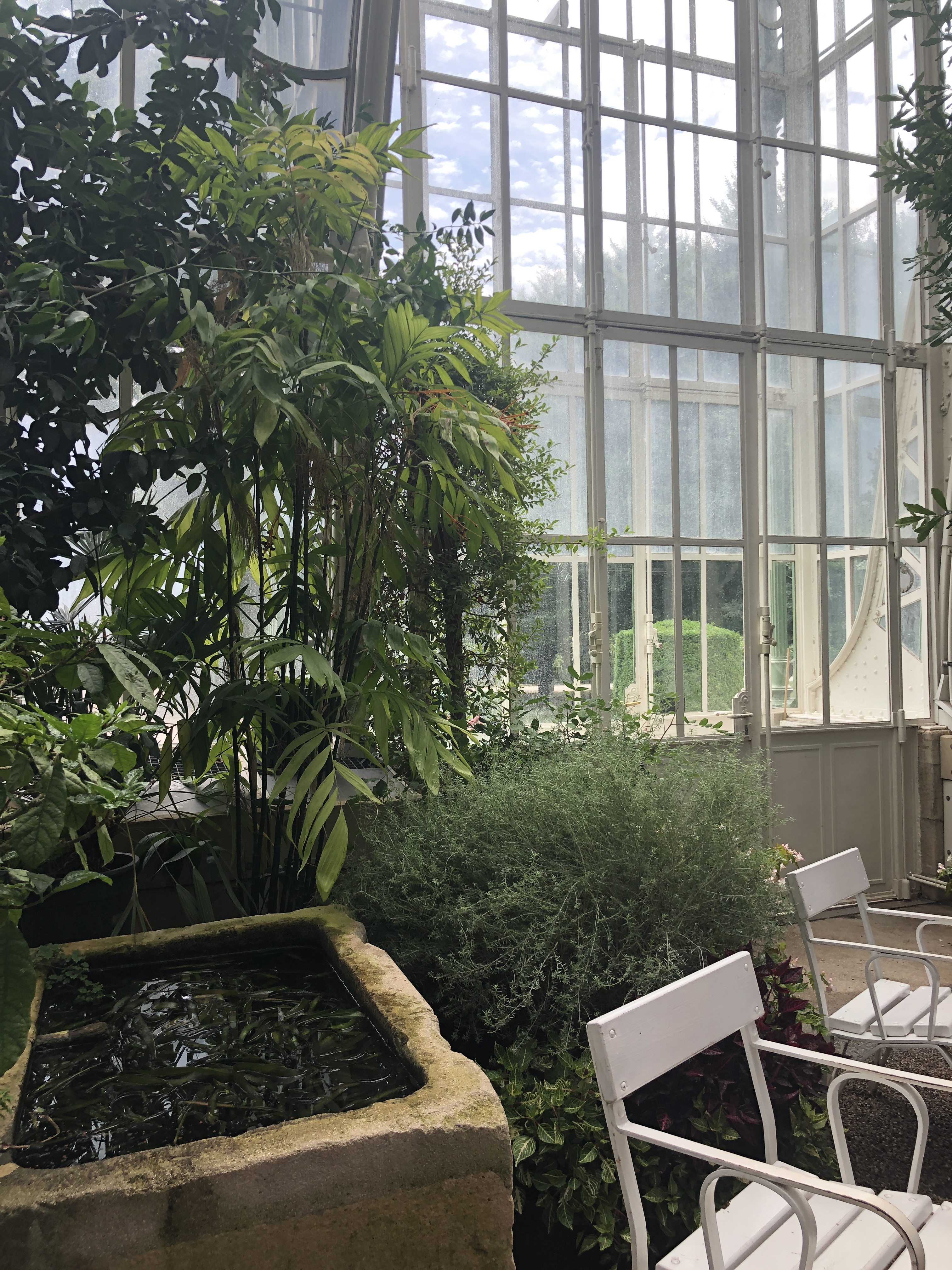
As I attempted to absorb the tepid atmosphere and take in the scenery, I was disrupted by the sight of students moving swiftly through the bushes. I was distracted by the sound of phone cameras going off left and right. This was not the Vienna that I had come to appreciate. While more public areas like St. Charles and the university are places of stagnation – at least for locals – locations such as Palmenhaus which are frequented more by tourists, experience a lot more movement, thus lacking the unique culture of Vienna.
This is an example post, originally published as part of Blogging University. Enroll in one of our ten programs, and start your blog right.
You’re going to publish a post today. Don’t worry about how your blog looks. Don’t worry if you haven’t given it a name yet, or you’re feeling overwhelmed. Just click the “New Post” button, and tell us why you’re here.
Why do this?
The post can be short or long, a personal intro to your life or a bloggy mission statement, a manifesto for the future or a simple outline of your the types of things you hope to publish.
To help you get started, here are a few questions:
You’re not locked into any of this; one of the wonderful things about blogs is how they constantly evolve as we learn, grow, and interact with one another — but it’s good to know where and why you started, and articulating your goals may just give you a few other post ideas.
Can’t think how to get started? Just write the first thing that pops into your head. Anne Lamott, author of a book on writing we love, says that you need to give yourself permission to write a “crappy first draft”. Anne makes a great point — just start writing, and worry about editing it later.
When you’re ready to publish, give your post three to five tags that describe your blog’s focus — writing, photography, fiction, parenting, food, cars, movies, sports, whatever. These tags will help others who care about your topics find you in the Reader. Make sure one of the tags is “zerotohero,” so other new bloggers can find you, too.

 City As Text